




Nominal vs. Absolute Filtration: What Is the Difference?
When a customer tells us they need a “1-micron filter,” we normally ask one additional question:
Is the required rating nominal or absolute?
This distinction is important when selecting an industrial filter cartridge because the micron number alone does not fully describe filtration performance.
What Is Nominal Filtration?
A nominal rating generally indicates the ability of a filter to remove a specified proportion of particles at a particular particle size under defined test conditions.
Nominal-rated cartridges are commonly used for general liquid filtration and prefiltration.
They can be suitable when the main objective is to reduce the overall particle load before another filtration stage.
However, the actual meaning of a nominal rating depends on the manufacturer's test method and specification.
What Is Absolute Filtration?
Absolute filtration refers to a more tightly defined particle removal performance at a specified particle size and test condition.
This type of rating can be important when particle control is a critical part of the process.
When comparing absolute-rated cartridges, we recommend reviewing the manufacturer's actual testing information rather than relying on the word “absolute” alone.
Why Does This Matter?
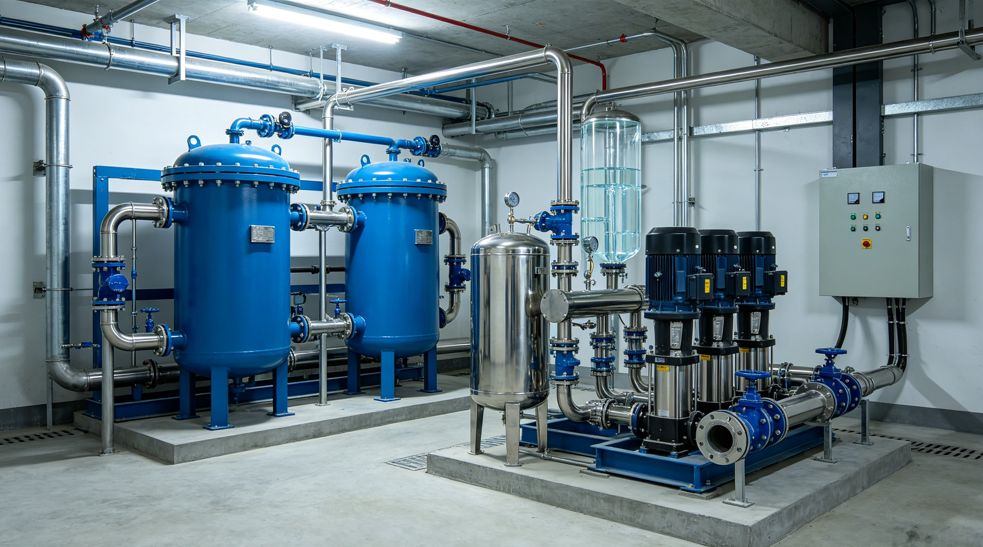
Consider an industrial water treatment system.
A prefilter may be used to protect an RO membrane or another downstream component.
If the filtration stage is not properly selected, excessive particles can reach the next stage and contribute to increased fouling or maintenance requirements.
The purpose of the filter is therefore not simply to achieve the smallest micron rating possible.
It needs to provide the right level of particle control for that particular stage.
Is a 1-Micron Filter Better Than a 5-Micron Filter?
Not necessarily.
A 1-micron cartridge may be appropriate for one application and unsuitable for another.
If a fine cartridge is installed upstream where the contaminant load is high, it may load rapidly and create a higher pressure drop.
A better-designed system may use several filtration stages:
Coarse Filtration → Sediment Filtration → Fine Filtration → Membrane Filtration
Each stage performs a different function.
What Should We Know Before Recommending a Cartridge?
When customers ask us to select a filter, we normally look at:
- Fluid
- Contaminant type
- Flow rate
- Micron requirement
- Nominal or absolute rating
- Temperature
- Pressure
- Existing filtration stages
- Downstream equipment
This information gives us a much clearer understanding of the actual filtration requirement.
Don't Compare Micron Ratings Without Checking the Test Method
Two cartridges can both be described as “1 micron” while having different filtration characteristics.
For this reason, when comparing products, we recommend checking:
Micron rating + rating type + test method + filter media + flow conditions
This is particularly important when replacing an existing industrial filter cartridge.
Our Approach at Homay
At Homay Filtration, we do not recommend a cartridge based on micron rating alone.
We look at filtration efficiency together with flow rate, pressure drop, contaminant loading, media compatibility and expected operating conditions.
For general prefiltration, nominal filtration may be appropriate.
For applications requiring tighter particle control, a more specific absolute filtration requirement may be necessary.
The correct selection always depends on the process.
Homay Filtration
Website: https://www.homayfiltration.com/
Email: sales@homayfiltration.com
If you are unsure whether your current cartridge is nominal or absolute rated, send us the existing cartridge specification and application details. We can help you understand the relevant filtration requirements before you select a replacement.