


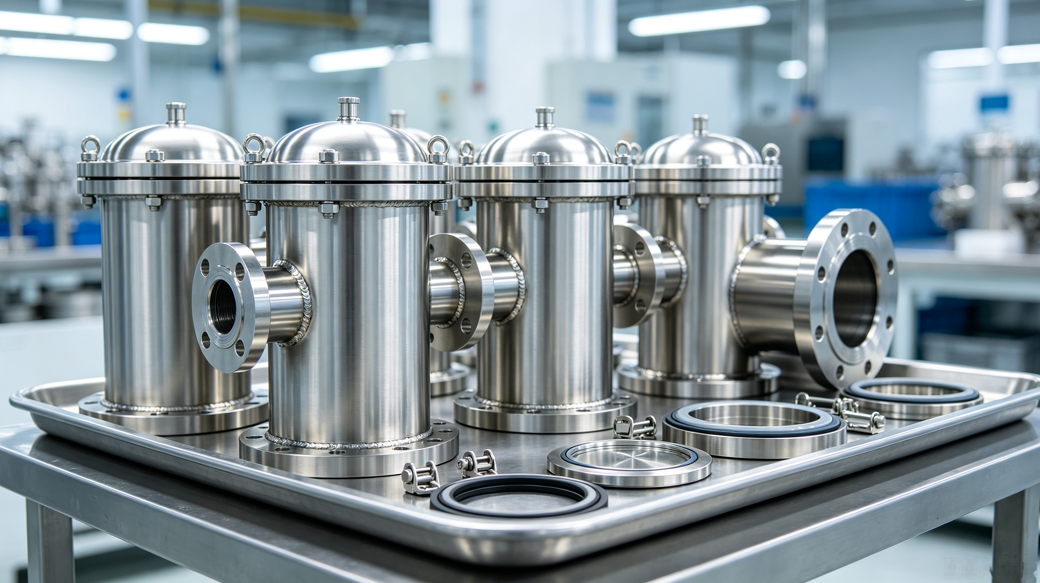
How to Select FRP Cartridge Housing for Industrial Water Treatment & Desalination
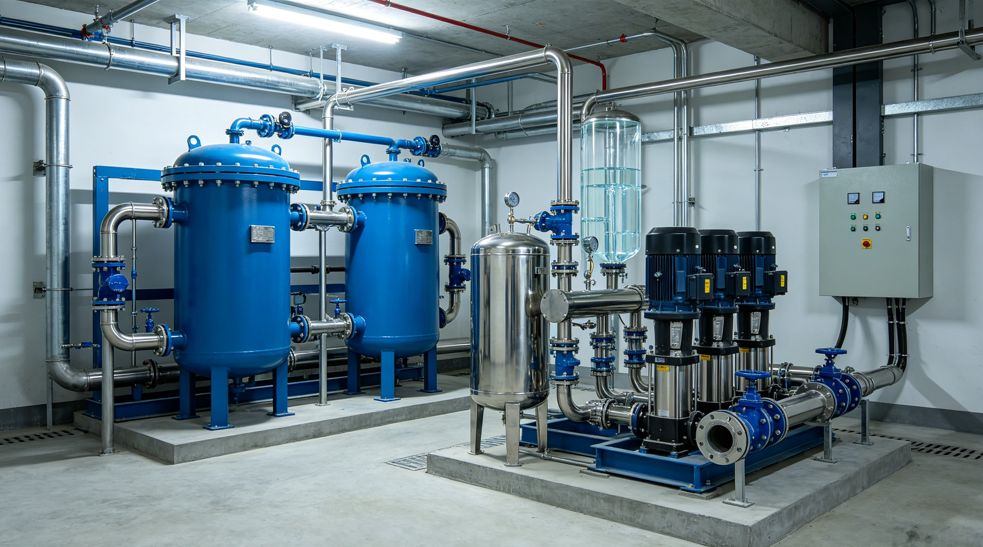
Fiberglass reinforced plastic (FRP) vessels are standard filtration equipment across seawater reverse osmosis (SWRO) pre-treatment, brackish water desalination, municipal water purification, and corrosive industrial liquid processing. Engineered through precision continuous filament winding with chemical-resistant vinyl ester or epoxy resin systems, an FRP cartridge housing delivers outstanding corrosion resistance compared with traditional 316L stainless steel vessels at lower lifecycle cost.
However, process engineers often experience premature cartridge fouling, end-cap leakage, or excessive differential pressure because they focus solely on micron retention without evaluating vessel geometry, port orientation, and seal compatibility. Selecting the right FRP cartridge housing requires a systematic assessment of operating conditions, element styles, and mechanical configurations.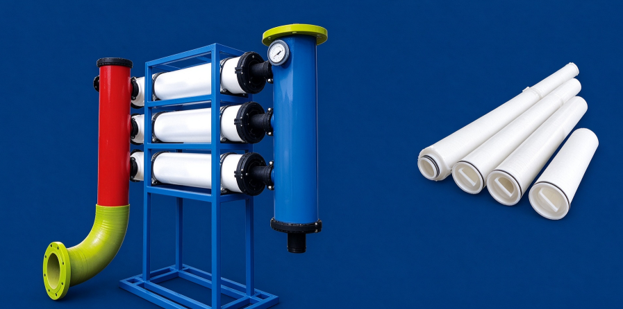
Clarify Operating Environment and Fluid Conditions First
Before finalizing vessel specifications, define your stream chemistry and operating conditions. High chloride concentrations and fluctuating feed temperatures dictate housing pressure boundaries and resin selection.
While stainless steel vessels suffer from pitting and crevice corrosion in high-salinity seawater and aggressive chemical streams, an FRP cartridge housing provides structural immunity against chloride attack. Verify your maximum continuous operating pressure (commonly 150 psi or 300 psi) and design temperature limits (typically up to 120°F / 49°C). Operating beyond design limits degrades resin matrices and compromises long-term pressure vessel integrity.
Match Cartridge Style, Length, and Flow Capacity
Vessel sizing directly governs filtration efficiency and change-out frequency. Industrial FRP vessels are engineered to accommodate high-flow filter elements that handle substantial throughput within a compact skid footprint:
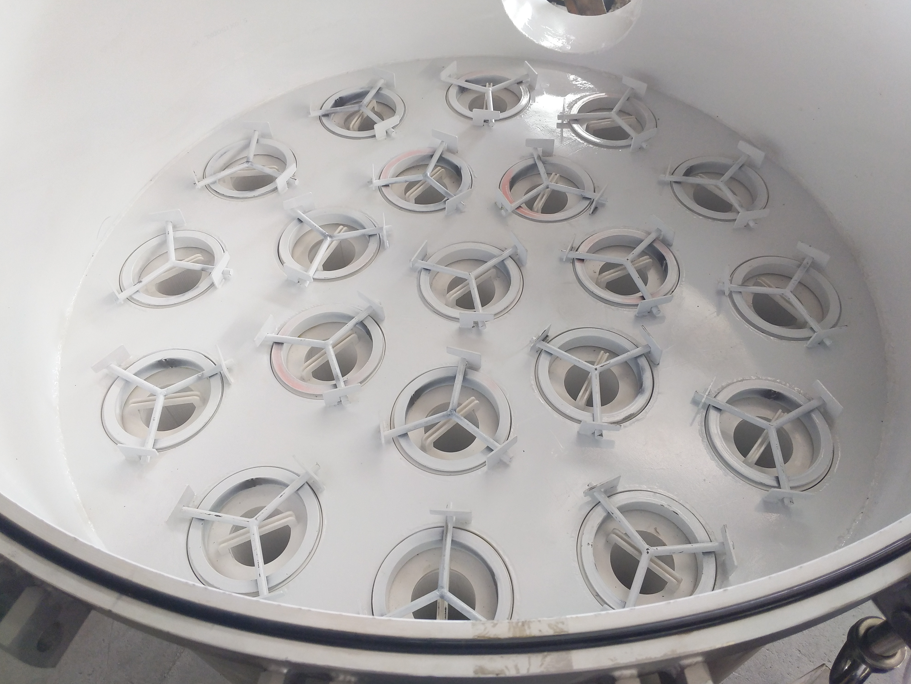
- Filter Style & Flow Direction: Determine whether your process requires inside-to-outside flow elements (such as Pall High Flow style) or outside-to-inside configurations (such as Aqualine style). Proper internal support hardware ensures positive element seating and prevents fluid bypass under high differential pressure.
- Element Length Options: Single-element housings are supplied in standardized lengths ranging from 20-inch, 40-inch, 60-inch, up to 80-inch and 120-inch assemblies.
- Flow Velocity and Pressure Drop: Sizing an FRP cartridge housing for a low clean differential pressure (< 2–3 psi) maximizes dirt-holding capacity, extends element service intervals, and reduces high-pressure feed pump power consumption.
Select Port Configuration and Piping Connections
Piping layout and available skid maintenance clearance determine whether a side port or end port vessel is optimal:
- Side Port (Side Connection): Inlet and outlet nozzles are located on the cylindrical shell. This layout allows operators to open end closures and change filter elements without dismantling header piping manifolds, reducing maintenance downtime.
- End Port (End Connection): Features inline flow nozzles on the end caps, providing a streamlined profile for compact vertical skids or simple straight-run piping systems.
Ensure nozzle connection styles—such as Victaulic grooved couplings, BSP/NPT threads, or ANSI flanges—match skid piping to avoid mechanical strain on vessel ports.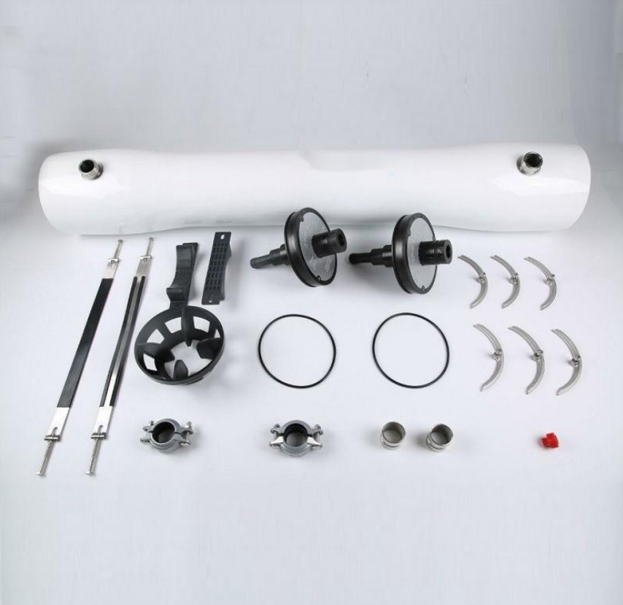
Specify Sealing Materials for Chemical and Thermal Compatibility
Leak-free operation depends on selecting the right elastomer O-rings for end caps and cartridge adapters:
- EPDM: The benchmark choice for seawater RO pre-filtration, municipal water treatment, dilute acids, and general industrial water loops.
- Silicone: Recommended for high-purity water loops requiring low compression set and wide thermal resilience.
- Viton (FKM): Mandatory when process streams contain oils, hydrocarbons, organic solvents, or aggressive industrial chemicals.
Incompatible elastomer seals will swell or embrittle over time, causing raw water bypass and exposing downstream RO membranes to particle fouling.
Verify Structural Integrity, Testing, and Traceability
Industrial water treatment skids require proven pressure safety. Ensure your manufacturer conducts hydrostatic proof testing on each FRP cartridge housing at 1.5 times the design working pressure. Batch traceability, smooth inner surface finishes, and precision-machined retaining rings guarantee uniform O-ring compression and dependable seal integrity across long operational cycles.
Real-World Guidance for Industrial Deployment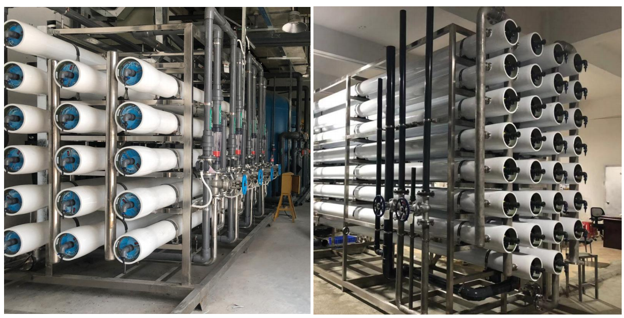
Theoretical sizing charts cannot replace real-world process validation. Share complete operating parameters with your filtration engineering team: raw water salinity, total suspended solids (TSS), operating temperature, operating pH, flow rate, connection style, and available maintenance space. Providing comprehensive operating data ensures you select the optimal FRP cartridge housing configuration, eliminating costly field retrofits and securing reliable continuous plant operation.