


Chlorine Reduction Activated Carbon Filter Elements: Protecting Taste, Membranes and Process Water
Chlorine does its job in the waterworks and then keeps working in all the wrong places. It attacks reverse osmosis membranes, taints coffee and soft drinks, disturbs plating baths and leaves a medicinal taste in drinking water. A carbon filter element for chlorine removal handles that in a single pass, and it remains one of the least expensive ways to protect everything downstream.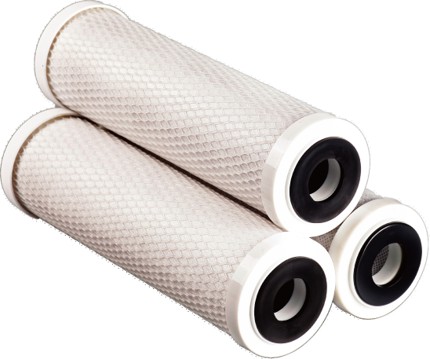
How Activated Carbon Removes Chlorine
Extruded elements are built from carbon fines and powder bound with food-grade additives, so the media forms a rigid, porous block rather than loose granules. That structure gives activated carbon an enormous internal surface area — up to 3,000 ㎡/g — where chlorine, chloramine, organics, taste and odor compounds and heavy metals are adsorbed and held. Because the block is bound, there is no carbon fine releasing: nothing washes downstream into the process, which matters on beverage filling lines, plating baths and medical equipment.
A carbon filter element for chlorine removal starts working the moment water touches the block, but flow rate decides how well. Removal efficiency is highest at low flow and falls away as velocity rises, so elements should be sized on the liters per minute the process actually draws — not on the housing they happen to fit.
Construction and Operating Limits
Materials follow the water chemistry. The media is either acid washed coal based GAC or coconut carbon, wrapped in polyethylene netting and closed with polyethylene end caps. Outside diameters are 65 mm, 70 mm and 115 mm. The elements are rated to a maximum operating temperature of 52 °C, a maximum operating pressure of 10 bar, and a maximum differential pressure of 7 bar at 20 °C. Seal material is specified separately as silicone, EPDM or NBR.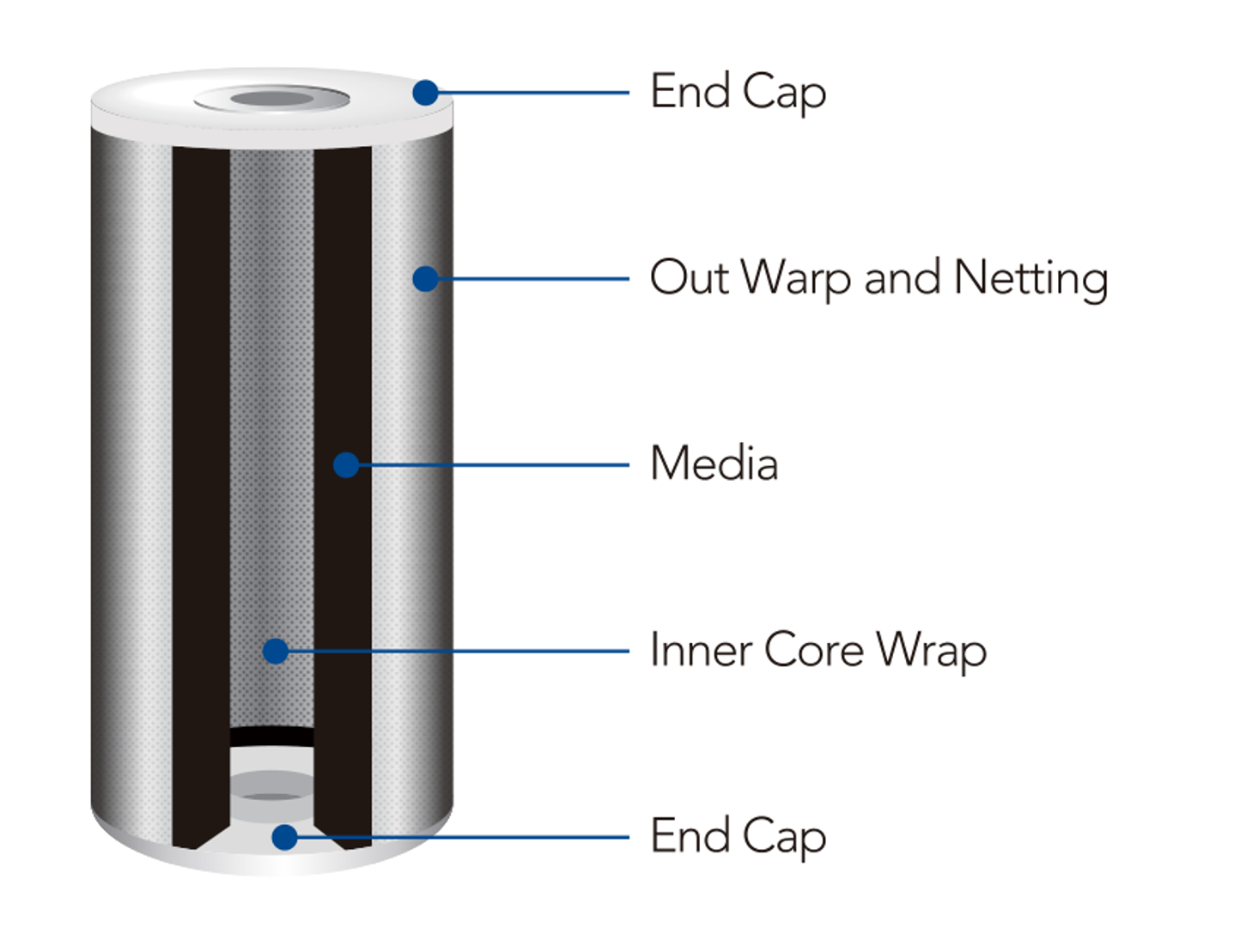
Choosing Between 0.5 and 10 Microns
Removal ratings run 0.5, 1, 5 and 10 µm. Fine grades suit taste-critical duties and applications where a carbon filter cartridge for drinking water must shield a downstream membrane, but the tighter the block, the lower the flow at a given pressure drop. Coarser 5 and 10 µm grades take higher flows and dirtier supplies. For a carbon filter element for odor removal in coffee shops, hotels or under-sink systems, a 5 µm rating is usually the practical balance.
Where These Elements Are Used
Drinking water treatment remains the core duty, from municipal plants to residential point-of-use systems, while food and beverage producers, chemical works and plating lines use the same elements wherever chlorine or organics interfere with process chemistry.
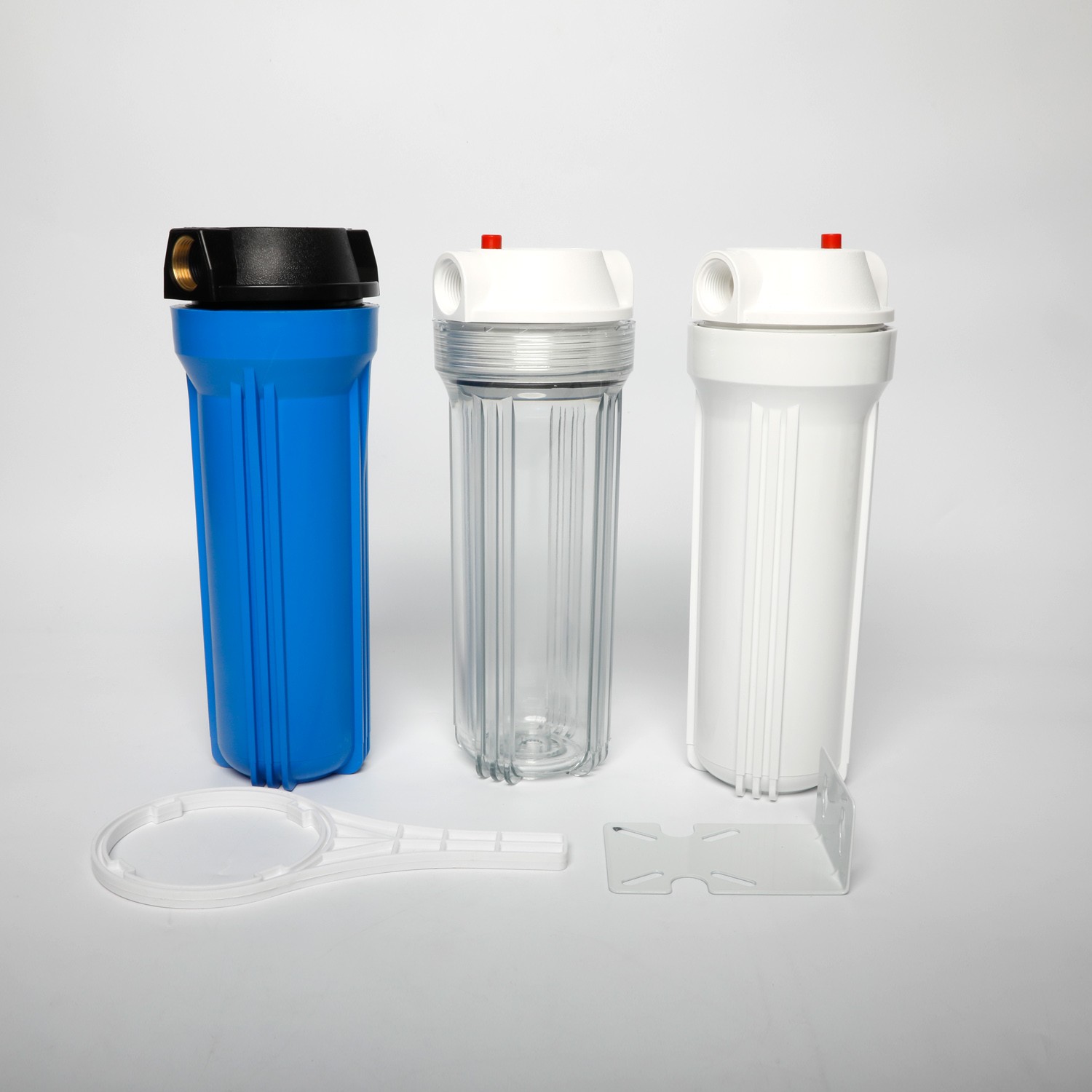
Hotels, coffee shops and medical laboratories rely on a carbon filter cartridge for drinking water for point-of-use protection. Industrial sites select a coconut shell activated carbon filter element where chlorine must come out ahead of reverse osmosis, and a coal based carbon filter element where the priority is broad organic and odor removal at the lowest cost per liter.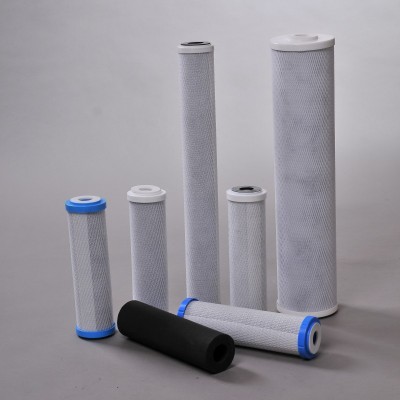
Reading the Ordering Code
The part code is compact. In HMC-A-5-987-A, HMC is the series; A, B or C defines end cap diameter (ID 28 mm with OD 70 mm, ID 30 mm with OD 65 mm, or ID 28 mm with OD 115 mm); 5 is the micron rating; 987 is the 9.87-inch length (250 mm); and A or B identifies acid washed coal based or coconut carbon media. Lengths run from 9.75 inches to 40 inches.
Buying from the Manufacturer
Carbon block quality is decided by binder content, compaction and activation, so the producer matters more than the datasheet. Homay Filter extrudes its own elements in-house under ISO 9001, holds FDA documentation for food-contact service, and accepts OEM/ODM orders on size, media and branding. If you are comparing wholesale activated carbon filter cartridges for a plant or a retail programme, ask for the media grade, the flow-versus-efficiency curve and a sample before you commit.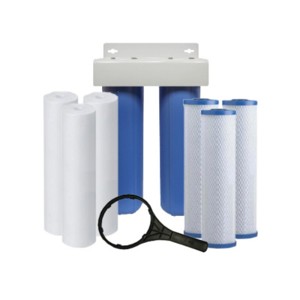
Send us your flow rate, inlet chlorine level and target rating, and we will recommend the right element and supply a sample for your own trial. Write to sales@homayfilter.com or visit www.homayfilter.com.