- Home
- Products
- Industries
- Resouces
- About Us
- Contact Us
Leave Your Message


Picking the right Water Purifier Filter supplier isn't just a box to tick. It can affect water safety, running costs, and whether customers actually trust what comes out of the tap. Global buyers, though, need way more than a nice-looking catalog or a quick quote. You've got to dig into filtration performance, where the materials come from, production capacity, and after-sales support. A supplier you can rely on should give you clear test data, consistent batch quality, and paperwork that actually works for different markets.
This guide looks at some leading suppliers for residential, commercial, and industrial applications. You'll see established names like 3M, Pentair, Toray, Omnipure, and Canature. Their ranges often include activated carbon filters, reverse osmosis membranes, ultrafiltration elements, and sediment cartridges. Each technology tackles different contaminants and flow needs. So buyers should match specs to local water conditions—not just marketing talk. The little stuff matters too. Pore size, connection type, replacement cycle, pressure limit—these can decide how a filter performs in the real world.
Supplier experience is worth a close look as well. Factory audits, independent lab reports, quality certifications, and sample testing can uncover weak spots before you place a big order. That said, no supplier is perfect. Public info may be incomplete, and certification scope can change by model or production site. That kind of uncertainty means you need to ask careful questions and get things verified in writing. Some buyers get laser-focused on unit price and forget about shipping damage, technical training, or whether replacement parts will be available. That can lead to costs you could have avoided later.
The suppliers here are looked at through practical buying factors, technical credibility, and long-term reliability. The point isn't to crown one universal winner. It's to help global buyers compare evidence, find suitable partners, and make decisions with fewer assumptions. Performance has to be proven. Even brands you trust still deserve a responsible evaluation.
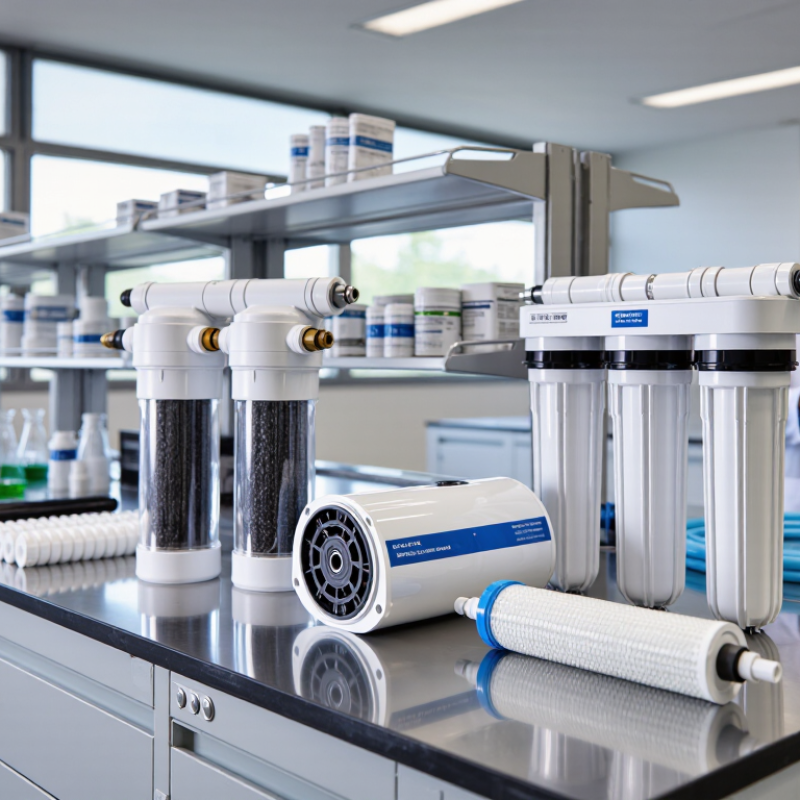
Water purifier filter suppliers provide more than replacement cartridges to global buyers. They offer sediment, carbon, membrane, and specialty filtration options for different water conditions. A reliable supplier explains pore size, flow rate, pressure limits, and expected service life clearly. Practical experience matters here. Filters designed for municipal water may perform poorly with well water or heavy sediment.
Global buyers also receive product samples, technical drawings, packaging support, and replacement schedules. Experienced suppliers can adjust fittings, labels, dimensions, and packaging for different markets. They should provide material declarations, batch records, test reports, and quality-control procedures. Clear documents reduce customs delays and support responsible purchasing. Still, paperwork is not proof of perfect performance. Buyers should test samples under realistic water conditions before placing large orders.
Communication is part of the supply. Good suppliers answer installation questions and explain maintenance risks without exaggeration. They may offer troubleshooting guides, training videos, and stable spare-part planning. Response time matters during a production delay. Not every supplier manages this well. Some specifications remain vague, and buyers must ask sharper questions about testing methods, warranty limits, and actual production capacity. Independent verification is wise when filtration performance affects public facilities, hotels, factories, or household safety.
| Supplier Offering Area | Common Products or Services | Typical Technical Range | Buyer Requirements Addressed | Documents or Standards Commonly Requested | Global Supply Support |
|---|---|---|---|---|---|
| Sediment Filtration | Melt-blown polypropylene cartridges, pleated cartridges, spun-bonded filters, and replacement sediment elements | Common nominal ratings include approximately 1–20 microns; cartridge lengths and connection sizes vary by housing design | Removal of sand, rust, silt, and suspended particles before carbon, ultrafiltration, or reverse osmosis stages | Material specifications, dimensional drawings, batch inspection records, and food-contact documentation where applicable | Bulk carton packing, private labeling, mixed container loading, and replacement-filter supply programs |
| Activated Carbon Filtration | Carbon block cartridges, granular activated carbon cartridges, coconut-shell carbon, and coal-based carbon media | Designed primarily for chlorine, taste, and odor reduction; performance depends on carbon type, contact time, and water chemistry | Improved taste and odor, chlorine reduction, and pretreatment for downstream membranes | NSF/ANSI 42 may be requested for aesthetic contaminant reduction claims; performance data should identify test conditions | Custom cartridge dimensions, printed packaging, export cartons, and scheduled repeat orders |
| Ultrafiltration Membranes | Hollow-fiber UF modules, inline UF cartridges, and compact membrane assemblies | Membrane pore ratings are commonly around 0.01 micron, although actual specifications and removal claims differ by design | Reduction of suspended solids, colloids, and many bacteria and protozoa when properly operated and maintained | Membrane integrity tests, flow-rate data, operating-pressure limits, and applicable drinking-water test reports | Technical installation guidance, replacement-module planning, and application support for household or light-commercial systems |
| Reverse Osmosis Membranes | Residential RO elements, commercial membrane elements, membrane housings, flow restrictors, and complete replacement kits | Residential capacities commonly include about 50–100 gallons per day under specified test conditions; actual output varies with pressure, temperature, and feed-water quality | Reduction of dissolved salts and many inorganic contaminants as part of a properly designed and maintained RO system | NSF/ANSI 58 may be requested for reverse-osmosis drinking-water treatment systems; buyers may also request salt-rejection and recovery data | Membrane compatibility checks, export packaging, technical datasheets, and recurring spare-parts programs |
| Specialty Media and Resins | Ion-exchange resin cartridges, deionization cartridges, iron-removal media, scale-control cartridges, and remineralization media | Media selection depends on target contaminants, feed-water hardness, pH, conductivity, flow rate, and service life | Hardness reduction, polishing after RO, conductivity control, and targeted treatment for specific water-quality conditions | Safety data sheets, media technical data, capacity calculations, and contaminant-specific test results | Application consultation, media loading instructions, customized cartridge filling, and replacement schedules |
| UV Disinfection Components | UV chambers, replacement lamps, quartz sleeves, electronic ballasts, and integrated UV purification modules | Germicidal UV-C systems commonly operate near the 254 nm wavelength; required dose depends on flow rate, UV transmittance, and target organisms | Microbiological control in clear, low-turbidity water; UV does not remove dissolved salts or suspended particles | UV dose-validation data, electrical safety documentation, lamp-life information, and regional conformity documents | Voltage and plug customization, spare-lamp supply, installation instructions, and service-part availability |
| Private-Label and OEM/ODM Services | Custom filter dimensions, housing colors, labels, packaging artwork, assembled purification units, and product modifications | Customization may cover cartridge length, connector type, flow direction, filter media, branding files, and packaging quantities | Market-specific product positioning, compatibility with existing systems, retailer packaging, and replacement-filter differentiation | Approved artwork, bill of materials, quality-control plan, product test reports, and intellectual-property authorization | Prototype sampling, pre-production approval, production inspection, carton marking, and documentation for import clearance |
| Quality and Export Documentation | Certificates of analysis, inspection reports, material declarations, packing lists, commercial invoices, and certificates of origin | Documentation typically records dimensions, materials, flow rate, pressure limits, batch identification, and test results | Supplier qualification, customs clearance, regulatory review, incoming inspection, and after-sales traceability | ISO 9001 quality-management certification may be requested; product claims should be supported by relevant regional or NSF/ANSI test evidence | Palletization, container planning, freight coordination, export labeling, and shipment tracking support |
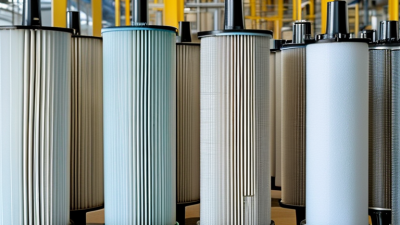
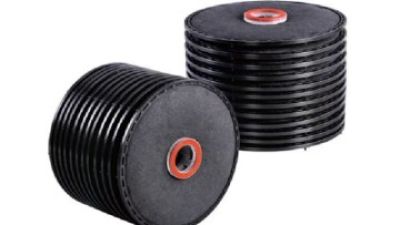
Our high-quality lenticular filter and depth stack cartridge is designed as a reliable replacement solution for demanding industrial filtration applications. Manufactured by a professional China supplier, it combines a robust cartridge structure with advanced cellulose-based depth filtration media. The design supports consistent flow, effective contaminant retention, and dependable operation in processes requiring stable and efficient filtration.
The Homay filter media uses a high-surface-area composition that integrates premium filter aids within a carefully engineered cellulose fiber matrix. This structure captures particles through mechanical entrapment while also supporting electrokinetic adsorption, helping retain fine contaminants throughout the depth of the media. The result is improved filtration performance, enhanced dirt-holding capacity, and reliable protection for downstream processing equipment.
Suitable for a variety of liquid filtration needs, the cartridge can be manufactured in different configurations to match process requirements, including flow rate, retention level, and operating conditions. With strict production control and a focus on material consistency, our factory provides practical cellulose filtration solutions for laboratories, food and beverage processing, biotechnology, chemicals, and other industries seeking dependable depth filtration performance.
Common options include sediment, activated carbon, membrane, ultrafiltration, and ultraviolet systems. A 5-micron filter may suit light sediment, but muddy water can block it quickly.
Match the filter to the raw-water problem, not only to a product catalogue. Test sand, rust, salts, chlorine, bacteria, and dissolved solids before ordering.
It captures sand, rust, and suspended particles. This helps protect finer filters and downstream equipment. It is not a complete purifier.
Activated carbon can reduce chlorine, unpleasant tastes, and many organic compounds. It does not remove every dissolved contaminant. Replacement timing may be earlier than expected.
Reverse osmosis membranes can reduce salts, fluoride, and several heavy metals. They may suit brackish water or sources with high dissolved solids. They also produce wastewater.
Ultraviolet systems need clear water and stable electrical power. Cloudy water can reduce treatment effectiveness. Maintenance still matters.
Request material declarations, batch records, test reports, drawings, and quality-control procedures. Ask for pore size, flow rate, pressure limits, and service-life data. Paperwork helps, but it is not perfect proof.
Yes, test samples with realistic local water conditions. A filter may perform differently after installation. That uncomfortable detail matters.
Useful support includes installation guidance, maintenance instructions, troubleshooting materials, and spare-part planning. Buyers should also ask about warranty limits and production capacity. Some answers remain vague.
Choosing reliable Water Purifier Filter suppliers is essential for global buyers seeking safe, consistent, and cost-effective water treatment solutions. Suppliers may offer sediment, activated carbon, ultrafiltration, reverse osmosis, and specialized membrane filters, each designed for different applications such as removing particles, odors, chemicals, microorganisms, or dissolved contaminants. Buyers should evaluate suppliers based on manufacturing capacity, quality control systems, testing procedures, product consistency, and internationally recognized certifications.
A thorough comparison should also consider pricing, minimum order quantities, private-label or customized designs, packaging, and production lead times. Professional suppliers should provide accurate technical documents, compliance records, invoices, packing lists, and shipping support for smooth international delivery. Clear communication, warranty policies, replacement parts, and responsive after-sales service are equally important for long-term cooperation. By reviewing product performance, certifications, commercial terms, logistics capabilities, and customer support together, global buyers can select a dependable supplier that matches their market requirements and operational goals.