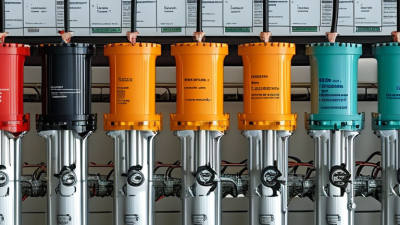
China has really become a go-to spot for reliable water treatment equipment—it's a major sourcing hub these days. This guide dives into ten well-established Chinese manufacturers of Water Filter Machines suitable for homes, offices, factories, and other commercial setups.
We didn’t just pick these companies based on hype or advertising buzz. Instead, we looked at real-world factors like their manufacturing experience, cutting-edge filtration tech, variety of products, quality control measures, certifications, export capabilities, and how solid their after-sales support is. Brands like Angel, Qinyuan, Midea, Haier, Litree, Canature, JOMOO, Viomi, Waterdrop, and Gree each have their own specialties. Some are all about household reverse osmosis systems, while others focus on ultrafiltration, industrial membranes, or all-in-one purification solutions.
But hey, keep in mind—being labeled a "top" company isn’t set in stone.
A factory with big capacity might not always give you the best local service, and even a household brand might not be super familiar with the specific conditions of industrial water in your area. So, we're not just tossing out rankings based on sales figures. Instead, we encourage folks to check test reports, verify where components come from, dig into production records, review warranty details, and see what kind of installation help they offer. In reality, how well a system performs depends on things like feed water quality, maintenance routines, filter replacements, and choosing the right system size—all of which are easy to overlook if you're not careful.
This info is mainly aimed at distributors, project contractors, importers, and professional buyers. It combines a good sense of the market with key practical points to consider. Just a heads-up—product specs and certifications can change over time. So, always verify the latest details directly with the manufacturer. If possible, visiting the factory or testing a sample can give you a clearer picture than just reading a slick brochure. That might feel a bit inconvenient, but honestly, it’s worth it. Buying reliably means doing your homework, not just assuming things are as they appear on paper.
What Defines a Leading Water Filter Machine Manufacturer in China
What Defines a Leading Water Filter Machine Manufacturer in China
A leading water filter machine manufacturer combines engineering knowledge with proven production experience. It understands that water quality differs between factories, cities, and industries. Engineers should examine source water reports before recommending equipment. They should discuss flow rate, pressure, temperature, contaminants, and daily operating hours. Real expertise appears in practical details, not impressive brochures. Clean explanations matter.
Reliable manufacturers control each production stage, from frame welding to pump assembly and membrane testing. They use traceable components and record inspection results before shipment. A serious factory should provide performance data, operating manuals, maintenance schedules, and clear warranty terms. Factory audits also reveal important facts, such as workshop cleanliness, testing instruments, spare-part storage, and technician training. These details build trust.
Independent testing and relevant certifications strengthen a manufacturer’s authority, but documents should match the actual machine. Buyers should request pilot tests with representative water samples. A system that performs well in a demonstration may behave differently after months of use. That possibility deserves honest discussion. No factory gets every decision right. The better ones admit limitations and adjust designs carefully. They provide responsive technical support, remote troubleshooting, and accessible replacement parts. Long-term reliability is measured after installation, not at the sales meeting.
Key Types of Water Filter Machines Made by Chinese Manufacturers
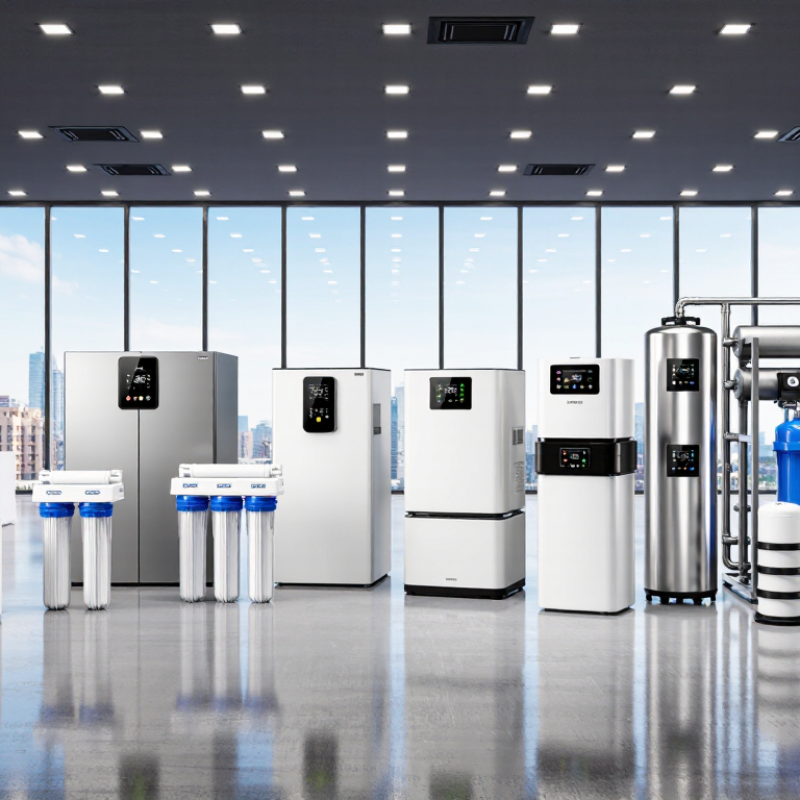
Chinese manufacturers produce several key types of water filter machines for homes, offices, factories, and public facilities. A household Water Purifier Machine often combines sediment filtration, activated carbon, and reverse osmosis. Sediment cartridges capture sand and rust. Carbon reduces chlorine taste and odor. Reverse osmosis removes many dissolved salts through a pressurized membrane. However, it also produces wastewater, which buyers should not overlook. Under-sink models save space, while countertop units simplify installation.
Ultrafiltration machines use hollow-fiber membranes to retain particles, bacteria, and some microorganisms while preserving certain minerals. They usually require lower pressure than reverse osmosis systems. Ultraviolet machines disinfect water with light, but they need clear water and stable electricity. Nanofiltration sits between ultrafiltration and reverse osmosis. Commercial systems often add larger carbon tanks, pumps, and storage vessels. Industrial models may include pretreatment tanks, membrane housings, flow meters, and automated control panels.
Reliable Chinese manufacturers should provide material specifications, flow-rate data, replacement schedules, and documented performance tests. Buyers should match the machine with local water conditions, not only catalog capacity. A stainless-steel frame does not guarantee safe filtration. Field checks often reveal loose fittings or poorly labeled cartridges. Small errors matter. Filter life also changes with pressure, temperature, and sediment levels. Independent testing and clear maintenance instructions make technical claims more trustworthy. No single design is perfect.
How China’s Top 10 Water Filter Machine Manufacturers Are Selected
How China’s Top 10 Water Filter Machine Manufacturers Are Selected
Selecting China’s top 10 Water Purification Machine manufacturers requires more than checking export volume. The 2023 WHO/UNICEF Joint Monitoring Programme reported that 2.2 billion people lacked safely managed drinking water in 2022. This pressure makes reliable filtration performance essential, not optional.
The assessment begins with technical evidence. We review contaminant-removal data, flow stability, energy use, membrane life, and replacement intervals. Independent laboratory reports matter more than promotional claims. Compliance with relevant ISO, NSF/ANSI, and national testing requirements also supports credibility. A factory should show traceable test records, batch controls, and clear installation instructions.
Real operating experience carries equal weight. We examine production capacity, quality-control procedures, export history, and after-sales response times. A machine that stops in a remote hotel needs more than a quick online reply. Spare-parts availability matters. Customer feedback from homes, offices, and factories is compared across several markets. Data from customs records and industry research reports can reveal consistency, but they are not perfect. Some smaller producers underreport exports, while large suppliers may overstate installed units. That weakness deserves attention. The final selection therefore combines technical audits, field evidence, certification checks, and transparent warranty policies rather than relying on sales rankings alone.
China Top 10 Water Filter Machine Manufacturers? - How China’s Top 10 Water Filter Machine Manufacturers Are Selected
| No. |
Selection Dimension |
Weight |
Verifiable Data Required |
Evaluation Standard |
| 1 |
Product Safety Compliance |
18% |
Valid test reports, material declarations, product safety files, and applicable market-entry documentation. |
Higher scores require traceable evidence that wetted materials and finished systems comply with the destination market’s rules. |
| 2 |
Filtration Performance |
16% |
Independent performance data for contaminant reduction, flow rate, recovery rate, pressure range, and rated filter life. |
Testing should identify the specific filter technology, test conditions, target contaminants, and measurement methods. |
| 3 |
Manufacturing Capability |
14% |
Auditable production facilities, assembly processes, quality checkpoints, equipment records, and documented capacity. |
Preference is given to manufacturers that control key production stages rather than relying only on trading or outsourcing. |
| 4 |
Quality Management System |
12% |
Current quality-management certification, inspection procedures, corrective-action records, and batch traceability. |
ISO 9001 certification may support the assessment, but certificate validity and actual implementation must also be checked. |
| 5 |
Product Range and Customization |
10% |
Available technologies such as sediment filtration, carbon adsorption, ultrafiltration, reverse osmosis, and ultraviolet treatment. |
Manufacturers score higher when they can adapt flow rate, voltage, housing, control systems, packaging, and installation requirements. |
| 6 |
Export and Documentation Capability |
8% |
Technical datasheets, installation manuals, declarations, packing information, customs documents, and destination-market labeling. |
Complete and consistent documentation reduces installation, customs, compliance, and after-sales risks. |
| 7 |
After-Sales Service |
8% |
Warranty terms, spare-parts availability, troubleshooting procedures, response channels, and technician training resources. |
A strong score requires clearly defined service responsibilities and practical support for the expected product life. |
| 8 |
Energy and Water Efficiency |
5% |
Power consumption, standby consumption, wastewater ratio, recovery rate, and operating pressure data. |
Performance claims must be compared under equivalent test conditions because system efficiency varies by feed-water quality and pressure. |
| 9 |
Supply Chain Reliability |
5% |
Lead-time records, component sourcing controls, safety-stock practices, production scheduling, and order fulfillment history. |
Higher scores reflect stable sourcing and transparent communication about minimum order quantities and delivery schedules. |
| 10 |
Commercial Value and Reputation |
4% |
Comparable total cost, transparent quotations, verified customer references, complaint-handling records, and measurable delivery performance. |
Price is assessed together with performance, warranty coverage, consumable cost, maintenance requirements, and documented reliability. |
| Total Evaluation Weight |
100% |
Manufacturers are shortlisted only after document review and verification of comparable evidence. |
Note: The weights represent a transparent selection framework rather than a claim of official market ranking. Certification scope, test conditions, product configuration, and destination-market requirements should be verified before purchasing.
Profiles of China’s Top 10 Water Filter Machine Manufacturers
Profiles of China’s Top 10 Water Filter Machine Manufacturers
China’s leading water filter machine manufacturers serve different technical niches. Several focus on household reverse osmosis systems, while others build ultrafiltration, nanofiltration, and industrial membrane equipment. Their profiles should include membrane recovery, rated flow, energy use, replacement intervals, and factory quality controls. The WHO/UNICEF JMP 2023 update reported that 2.2 billion people lacked safely managed drinking water in 2022. This demand supports continued investment in reliable filtration equipment.
The strongest manufacturers usually operate testing laboratories, automated assembly lines, and export compliance systems. Some specialize in compact countertop units with digital monitoring. Others produce stainless-steel skids for hotels, hospitals, food plants, and municipal projects. FAO AQUASTAT data indicates that agriculture accounts for about 72% of global freshwater withdrawals. Therefore, suppliers with wastewater reuse and process-water expertise deserve closer attention. Certification alone is not enough. Buyers should inspect batch records, membrane test results, noise levels, and after-sales response times.
A practical top-ten comparison should examine production scale, research capability, customization, and verified installation records. Factory audits can reveal details that brochures often hide, such as inconsistent welding or weak cartridge sealing. Cost remains important, but the cheapest machine may create higher maintenance expenses. Rankings can still mislead when shipment volume replaces product reliability. This is where independent testing and transparent performance data matter.
Manufacturing Technology and Quality Standards to Compare
China Top 10 Water Filter Machine Manufacturers: Manufacturing Technology and Quality Standards to Compare
Comparing a Ro Machine requires more than checking production capacity or catalog photographs. A reliable factory should explain its membrane selection, pump performance, control system, and water-contact materials. Stainless steel frames should resist corrosion, while food-grade plastics need documented material verification. Small details matter.
During a factory audit, inspect assembly areas, pressure-testing stations, and component storage. Ask whether every unit receives a leakage test before shipment. Check digital records for flow rate, recovery rate, and salt rejection. These figures should come from repeatable testing, not one ideal sample. Numbers can mislead. A polished cabinet proves little.
Manufacturing quality also depends on process control. ISO 9001-based procedures can improve traceability, corrective actions, and inspection records. For drinking-water equipment, applicable NSF/ANSI requirements or local safety standards should be confirmed for the target market. Electrical parts need appropriate safety certification, especially when pumps and controllers operate near water. A trustworthy supplier should provide manuals, replacement schedules, test reports, and clear warranty terms. However, documentation may still contain gaps. That deserves attention. Compare membrane life under actual feed-water conditions, not only laboratory results. Ask for batch records and independent test evidence when possible. A serious manufacturer welcomes difficult questions and explains limitations without hiding behind impressive specifications.
Export Markets, Certifications, and Customer Support
China’s top 10 water filter machine manufacturers should be judged beyond factory size.
Export experience matters more than impressive catalog photos.
Strong suppliers usually serve markets in Southeast Asia, the Middle East, Africa, Europe, and North America.
However, market coverage does not always prove consistent quality.
Ask for current certificates, not scanned documents from years ago.
ISO 9001 can indicate controlled production procedures.
CE may support sales in applicable European markets.
NSF/ANSI or other local approvals may matter for drinking-water equipment.
Requirements differ by destination.
Check model numbers, testing laboratories, certificate validity, and material safety reports.
A supplier with technical staff should explain flow rates, membrane life, electrical standards, and replacement schedules clearly.
Vague answers are warning signs.
I have found that small details, such as plug types and carton markings, often delay shipments.
Tips:
Request three recent export references.
Test one sample before bulk production.
Confirm spare-parts availability in writing.
Ask how quickly faults are handled across time zones.
A useful support team provides installation drawings, videos, troubleshooting steps, and remote guidance.
Some manufacturers promise twenty-four-hour replies, but response quality can still be weak.
Measure actual communication during the sample stage.
That early experience may reveal more than a polished factory tour.
How to Choose the Right Chinese Water Filter Machine Manufacturer
Choosing the right Chinese water filter machine manufacturer requires more than comparing prices. The WHO/UNICEF Joint Monitoring Programme reported that 2.2 billion people lacked safely managed drinking water in 2022. This figure shows why filtration performance and production reliability matter. A capable supplier should provide independent test results for flow rate, recovery rate, membrane rejection, and contaminant reduction. Ask for recent records, not attractive brochures.
For a Reverse Osmosis Machine, inspect the factory’s testing process closely. Check whether each unit receives pressure, leakage, electrical safety, and water-quality testing before shipment. ISO 9001 certification can indicate process control, but it does not prove actual filtration performance. Request product samples and compare laboratory results with the stated specifications. Small details matter. Look at tubing connections, pump noise, labeling, and replacement-filter availability.
The 2024 UN World Water Development Report highlights growing pressure on freshwater resources and infrastructure. Therefore, the manufacturer should understand local water conditions, not simply sell one standard design. Discuss feed-water hardness, chlorine levels, temperature, and expected daily capacity. I would also review after-sales response times and spare-parts planning. A factory visit is useful, although it cannot reveal everything. A polished showroom may still hide weak quality control, so independent inspection remains worth the cost.
FAQS
A reliable manufacturer studies source-water reports before suggesting equipment. It checks flow, pressure, temperature, contaminants, and daily operating hours. Practical evidence matters more than glossy brochures.
Inspect frame welding, pump assembly, membrane testing, and workshop cleanliness. Check testing instruments, spare-part storage, and technician training. Small details can expose larger problems.
Common systems include sediment filters, activated carbon units, reverse osmosis, ultrafiltration, ultraviolet, and nanofiltration machines. Commercial models may add pumps, storage tanks, and control panels.
Reverse osmosis removes many dissolved salts but produces wastewater. Ultrafiltration uses lower pressure and preserves some minerals. The right choice depends on contaminants and local water conditions.
Pilot tests use representative water samples under realistic conditions. They reveal flow changes, membrane behavior, and maintenance needs. A short demonstration may not predict long-term performance.
Ask for material specifications, flow-rate data, performance tests, operating manuals, and replacement schedules. Clear warranty terms are also important. Missing documents deserve questions.
Review inspection records, batch controls, installation instructions, and replacement-part availability. Ask how quickly technicians respond to remote problems. Reliability appears after installation.
No. Certifications strengthen credibility, but documents must match the actual machine. Compare them with field evidence, factory audits, and customer feedback. Some selection data remains imperfect.
Conclusion
China has become a major source of reliable water treatment equipment, offering solutions for residential, commercial, industrial, and municipal applications. A leading Water Filter Machine manufacturer is typically defined by strong engineering capabilities, consistent production quality, strict testing procedures, and the ability to customize equipment for different water conditions. Chinese manufacturers produce various systems, including sediment filters, activated carbon units, membrane filtration equipment, ultrafiltration systems, reverse osmosis machines, and integrated treatment lines.
This overview explains how the top 10 manufacturers can be evaluated through product performance, manufacturing technology, quality standards, production capacity, certifications, export experience, and after-sales support. It also compares their ability to provide energy-efficient designs, stable filtration results, replacement parts, technical guidance, and responsive customer service. When selecting a suitable supplier, buyers should consider water quality, required output, installation conditions, budget, compliance needs, customization options, delivery capability, and long-term maintenance support rather than relying only on price.