- Home
- Products
- Industries
- Resouces
- About Us
- Contact Us
Leave Your Message


Choosing a Reverse Osmosis System should begin with your water, not a glossy product page.
A practical inspection starts at the kitchen tap. Notice cloudy water, metallic taste, low pressure, or a musty smell. Then test for hardness, chlorine, nitrates, lead, and other relevant contaminants. Water reports can help, but private wells require current laboratory testing. Guessing is expensive.
Dr. Joseph Cotruvo, a respected water-quality expert, offers a useful principle: “Treatment choices should begin with testing, not advertising.” That advice remains easy to ignore. It should not be. A certified system from organizations such as NSF International can provide stronger performance evidence. Still, certification must match the specific contaminant and claim.
This guide explains seven practical selection points. Check daily capacity, membrane quality, recovery rate, storage-tank size, operating pressure, replacement-filter costs, and installation support. Ask how much water the unit sends to drain. A cheap system may waste several gallons for each gallon produced. That detail affects both cost and household sustainability.
A Whole House Reverse Osmosis System needs even closer evaluation. It may require pretreatment, stronger plumbing, and professional installation. It can also remove minerals that some users prefer to retain. That trade-off deserves an honest conversation.
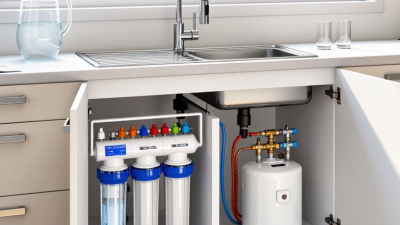
Look beyond the first-year price. Filters, sanitizing, leak protection, and service visits shape long-term value. Even experienced buyers can overlook maintenance access beneath a crowded sink. Measure the cabinet first. Small mistakes matter.
The best choice is rarely the most powerful model. It is the system that fits your water, space, budget, and maintenance habits.
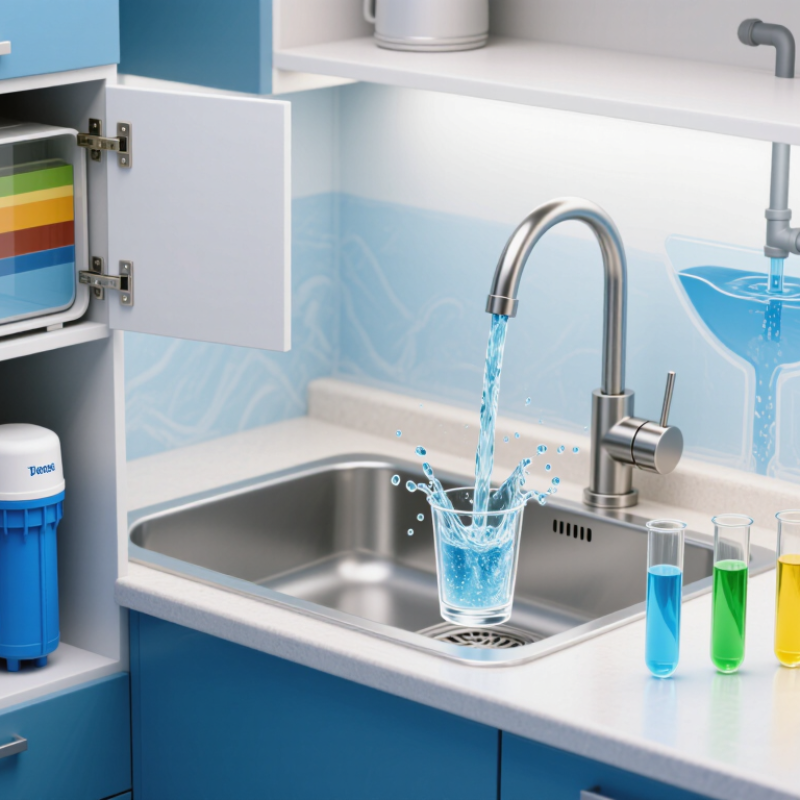
Before choosing a Reverse Osmosis Water Filter System, define the problem at your tap. Review your latest laboratory report, not only the water’s taste or smell. Test for lead, arsenic, nitrate, fluoride, hardness, and microbial indicators when appropriate. The World Health Organization sets a 10 μg/L guideline for arsenic and 50 mg/L for nitrate. These numbers give treatment goals measurable meaning.
Municipal water customers should read their annual quality report, while private-well owners need independent testing. The U.S. Environmental Protection Agency explains that reverse osmosis can reduce several dissolved contaminants, but performance varies by membrane, pressure, and maintenance. Look for certification against NSF/ANSI 58 for verified reduction claims. Ask whether the system wastes several litres of water for one litre treated. That detail matters.
Do not treat total dissolved solids as a complete safety score. A low reading can still hide certain contaminants, while useful minerals may also be removed. This is where selection becomes less tidy. Measure your family’s daily drinking and cooking needs, then check storage capacity and filter replacement costs. WHO and UNICEF reported that 2.2 billion people lacked safely managed drinking water in 2022, but a home filter cannot solve every water-quality problem. Test again after installation. The first decision may still be wrong.
China’s reverse-osmosis (RO) water-treatment sector is benefiting from rising demand for reliable pretreatment and membrane protection. The 2024 MarketsandMarkets analysis projects the global water-treatment chemicals market to grow from approximately USD 38.5 billion in 2024 to USD 51.2 billion by 2029, reflecting a compound annual growth rate of about 5.9%. In parallel, Grand View Research identifies continued expansion in water and wastewater treatment equipment, supported by industrial reuse, municipal upgrades, and stricter water-quality requirements. These trends are increasing interest in cost-effective depth filtration before RO membranes.
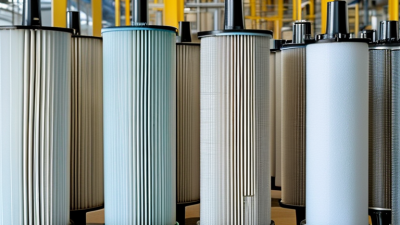
A premium string wound filter cartridge, manufactured by experienced Chinese suppliers, provides a practical solution for this stage. Its graded-density yarn is wound around a strong porous core, creating progressive depth filtration that captures suspended solids, sediment, rust, and other particulate matter throughout the cartridge structure. This design helps maintain dependable particle retention while supporting a low pressure drop, which can reduce energy demand and extend operating cycles.
With broad chemical compatibility and flexible micron-rating options, the cartridge is suitable for pre-filtration, process-water clarification, and protection of downstream membranes, pumps, and precision components. Chinese production capabilities also support customized dimensions, materials, and packaging for different RO system requirements, enabling consistent filtration performance for residential, commercial, and industrial water-treatment applications.
Test for lead, arsenic, nitrate, fluoride, hardness, and microbial indicators when relevant. Use a recent laboratory report. Taste alone is unreliable.
Use measurable targets from trusted health guidance. Common reference values include 10 μg/L for arsenic and 50 mg/L for nitrate. Local conditions may require different testing.
Yes. Arrange independent laboratory testing for private wells. Municipal users should review their latest annual water-quality report. Repeat testing after installation.
No. More stages do not guarantee better treatment. A practical setup may use sediment, carbon, membrane, and post-carbon filtration. Seven stages might be excessive.
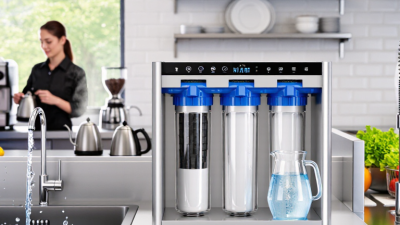
Sediment filtration catches sand, rust, and visible particles. Carbon reduces chlorine, odors, and some organic compounds. The membrane reduces many dissolved salts and metals.
Sediment and carbon filters protect the membrane from particles and chlorine. Replace them regularly. Neglected filters can reduce performance quickly.
Compare purified water with water sent to the drain. Do not rely only on stage counts. Some systems may waste several litres for one litre treated.
Measure household drinking and cooking needs first. A tank improves availability but uses cabinet space. A tankless design may require stronger pressure and electricity.
No. A low reading can still hide specific contaminants. It may also reflect the removal of useful minerals. This measurement is incomplete.
Match certified reduction claims with your local laboratory results. Check pressure, replacement costs, storage space, and flow speed. I focused too much on taste once. That was a poor comparison.
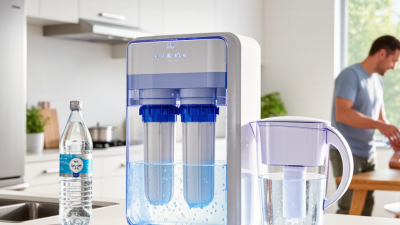
Choosing the right Reverse Osmosis System begins with understanding your water quality and treatment goals. Test the water to identify issues such as sediment, chlorine, minerals, or unpleasant tastes, then compare filtration stages to determine which combination best addresses those concerns. Consider the system’s production capacity and whether it can meet your household’s daily drinking and cooking needs without excessive waiting.
Efficiency and long-term practicality are equally important. Review the system’s water recovery rate to understand how much wastewater it produces, and evaluate installation requirements, filter replacement schedules, and routine maintenance. Certifications can provide confidence that the system has been tested for performance and safety, while useful features may improve convenience and monitoring. Finally, compare the total cost, including purchase, installation, replacement filters, and water usage, rather than focusing only on the initial price. A balanced assessment will help you select a reliable, efficient, and suitable solution for your home.