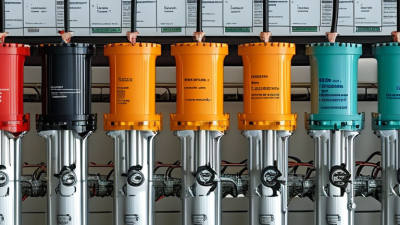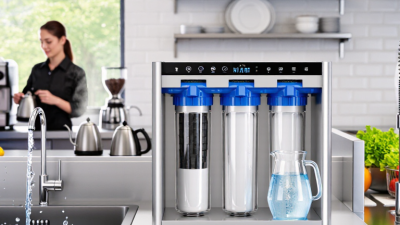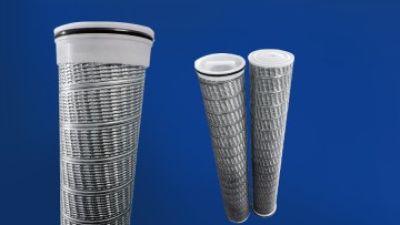
A cartridge filter is basically a replaceable part used to clean water in all sorts of systems—think water treatment plants, swimming pools, food production lines, and industrial setups. The idea’s pretty straightforward: water flows through this pleated medium, trapping dirt and particles on its surface or deep inside the filter. The filter housing guides the water to flow around the cartridge and out the clean-water outlet. But here's the thing—those tiny details really matter. The quality of the seal, the size of those tiny pores, the pressure they're under, and how fast the water flows all play a role in how well it works.
When field techs come out for inspections, they’re looking for signs like uneven discoloration, crushed pleats, damaged end caps, or weird pressure jumps. Those little clues can indicate issues like poor installation, too much sediment buildup, or maybe that the filter isn't the right fit. Speaking of fit, an Aqua Filter Water Filter Cartridge might do the trick for one system, but you’ve gotta double-check compatibility—dimensions, connection types, and all that—because not all filters are created equal, and neither is their cleaning efficiency.
Just because a cartridge looks clean doesn’t mean the water is perfectly spotless—some contaminants are invisible to the naked eye. That’s why regular testing is super important. Manufacturers usually give you general guidelines on when to replace the filters, but honestly, it depends on the water quality and how much you’re using the system. It’s kind of a judgment call—replace it too early and you might be wasting resources, delay and you could be reducing flow or putting extra strain on your equipment.
This guide is here to walk you through how a cartridge filter actually works, what it’s good at removing, and how to pick the right one. We’ll also cover some common maintenance mistakes and what to realistically expect in terms of performance. Remember, cartridge filtration is pretty reliable, but it’s not magic. The key is choosing the right size, installing it properly, and keeping an eye on it regularly—that’s what really makes a difference.
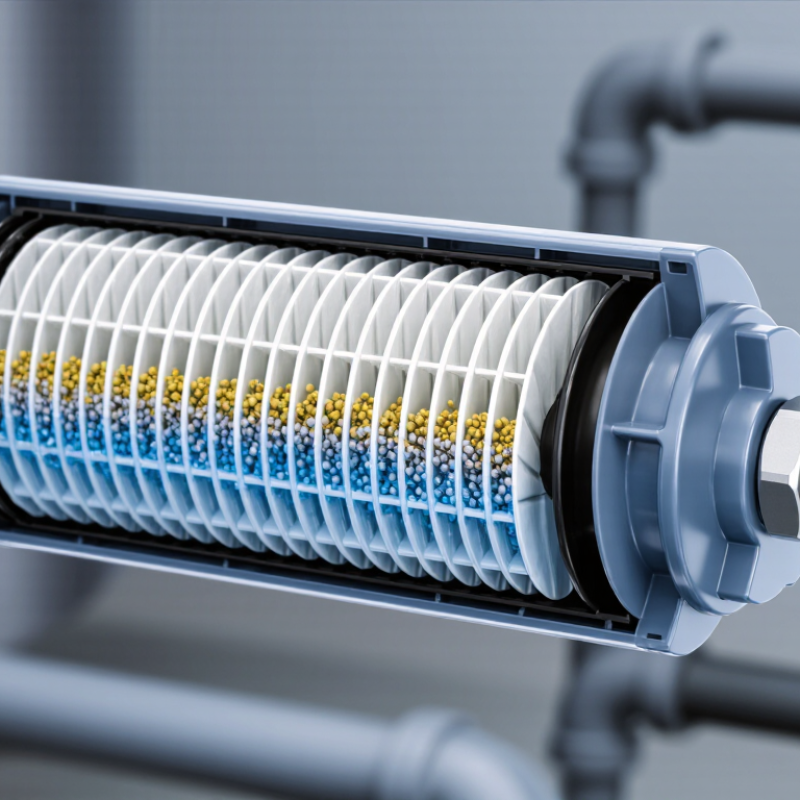
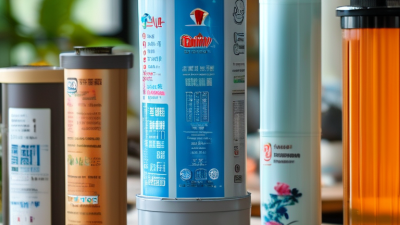
A Cartridge Filter is a replaceable filter element housed inside a sealed casing. Water flows through its pleated fabric, spun fiber, carbon block, or membrane material. The filter captures sediment, rust, chlorine, odors, and sometimes microorganisms. Performance depends on the filter media and its micron rating. A 5-micron cartridge can trap finer particles than a 20-micron model, but it may clog sooner. This trade-off is easy to overlook.
The need for reliable filtration is significant. The WHO and UNICEF Joint Monitoring Programme reported that 2.2 billion people lacked safely managed drinking water in 2022. The U.S. EPA’s 2023 Drinking Water Infrastructure Needs Survey estimated $625 billion in required investment over 20 years. These figures do not prove that every home needs a cartridge system. They do show why treatment decisions deserve careful attention. NSF/ANSI 42 covers aesthetic improvements, while NSF/ANSI 53 addresses specific health-related contaminants. Certification should match the contaminant, not just the product description.
Tips: Check the cartridge’s micron rating and certified claims. Replace it when flow drops or the schedule ends. Clear water can still contain invisible contaminants. Keep a simple replacement record. It prevents guesswork. Some users change filters too late, while others replace them unnecessarily. Your source water test should guide the choice.
A cartridge filter removes suspended particles as water or air passes through a replaceable filter element. Its housing directs flow through the media, while the media captures dirt, rust, scale, or other particles. The main components are simple, but each affects performance.
The outer housing provides pressure resistance and contains the filter element. Inside, pleated fabric or melt-blown media creates a large filtration area. Pleats increase surface area without making the cartridge excessively large. End caps hold the media in place, while a central core prevents collapse under pressure. Gaskets and O-rings seal the cartridge against bypass flow. In an I Filter Cartridge assembly, inlet and outlet ports guide the fluid through this sealed path. A pressure gauge can show rising resistance, although gauges sometimes need calibration. No filter is perfect.
A 2024 Grand View Research report estimates steady growth in the global cartridge filter market, supported by demand for cleaner process water and tighter industrial controls. Its analysis also highlights disposable and replaceable cartridges as major product segments. These figures describe market activity, not guaranteed filtration results. Actual performance depends on pore size, fluid quality, temperature, and flow rate.
Tips: Check the cartridge’s micron rating before installation. A lower micron rating usually captures smaller particles, but it may reduce flow faster. Inspect the seal for twisting or cracks. Small defects can create a hidden bypass. Replace the element when pressure rises noticeably, not only when it looks dirty. A visual check alone can be misleading.
A Filter Cartridge is a replaceable housing filled or lined with porous filter media. As water or another permitted fluid enters, pressure pushes it through tiny pathways. The media holds back particles larger than its openings. Smaller particles may travel deeper into the material. That distinction matters. Capture can occur on the surface, inside the media, or through both mechanisms. Fibers, pleats, and layered sheets increase contact area without making the housing excessively large.
During operation, suspended dirt, rust flakes, sediment, and some microorganisms can be intercepted, depending on the cartridge design and rated pore size. A pleated cartridge catches particles across its broad outer surface. A depth cartridge traps particles between tangled fibers. The trapped material gradually blocks flow, so pressure rises before the cartridge reaches its useful limit. In a working installation, I would compare inlet and outlet pressure rather than judge condition by appearance alone. Clear water is not proof of complete removal.
Performance depends on flow rate, fluid temperature, viscosity, seal quality, and correct installation. If fluid moves too quickly, contaminants may pass through or damage the media. A poor seal can create a bypass path around the filter. Not magic. The stated micron rating also needs careful interpretation, because testing methods differ. Operators should track pressure changes and replace the cartridge according to verified operating data. I have to admit, visual inspection remains useful, but it is an imperfect guide.
Cartridge filters remove unwanted particles as water or air passes through a replaceable filter medium. Their design matters more than appearance. Pleated cartridges offer large surface areas and suit sediment-heavy water. Depth cartridges, including melt-blown and string-wound types, trap particles throughout their thickness. They can hold more dirt, but pressure may rise quickly. Membrane cartridges use very fine pores for microfiltration or ultrafiltration. Reverse-osmosis cartridges separate dissolved substances, not only visible debris. Activated-carbon cartridges reduce chlorine, odors, and some organic compounds. They are not automatically microbiological barriers. The World Health Organization’s 2022 drinking-water report states that 2.2 billion people lacked safely managed drinking water in 2022, showing why correct treatment selection matters.
Cartridge performance depends on pore rating, flow rate, pressure, and contaminant load. “Nominal” ratings allow some particles through; “absolute” ratings provide tighter control under defined test conditions. NSF/ANSI standards 42, 53, and 58 address different treatment claims, including aesthetic effects, health-related contaminants, and reverse osmosis systems. Independent testing should support every claim. Real installations are less predictable. Sediment levels change after storms, and a filter may clog earlier than expected. Industry reports also distinguish point-of-use and point-of-entry systems, because household demand and contact time differ.
Tips: Match the cartridge to the contaminant report, not to water clarity alone. Check pressure before and after the housing. Replace cartridges by measured pressure loss or validated capacity. Keep a service log. It exposes mistakes.
| Filter Type | How It Works | Typical Particle-Retention Range | Common Filter Media | Typical Applications | Main Advantages | Important Considerations |
|---|---|---|---|---|---|---|
| Depth Filter Cartridge | Particles are captured throughout the thickness of a porous medium through interception, adsorption, and entrapment. | Approximately 1–100 micrometres, depending on construction and rating. | Polypropylene, cellulose, polyester, or blended fibers. | Pre-filtration, process water, cooling water, and general industrial liquid filtration. | High dirt-holding capacity and effective removal of particles with varying sizes. | Nominal ratings are not absolute ratings; performance can vary with particle shape and concentration. |
| Pleated Membrane Cartridge | Liquid passes through a thin membrane with precisely controlled pores that retain particles mainly at the surface. | Approximately 0.04–1.2 micrometres, depending on membrane type. | Polyethersulfone, PTFE, nylon, or cellulose-based membrane. | Fine water treatment, food and beverage processing, laboratory liquids, and pharmaceutical processes. | High filtration precision and large surface area in a compact housing. | More sensitive to fouling; upstream pre-filtration may be needed to extend service life. |
| Surface Filter Cartridge | Most contaminants are retained on or near the outer surface of the filter medium. | Approximately 1–50 micrometres. | Polyester mesh, nylon mesh, stainless steel mesh, or nonwoven sheets. | Coarse solids removal, reusable straining, hydraulic systems, and industrial fluids. | Predictable particle separation and relatively easy cleaning when reusable media are used. | Can block quickly when the fluid contains a high concentration of deformable or sticky solids. |
| String-Wound Cartridge | Wound fibers form progressively tighter passages that trap suspended solids through the depth of the cartridge. | Approximately 1–100 micrometres. | Polypropylene, cotton, polyester, or other compatible fibers. | Water pre-treatment, well water, irrigation, and low-to-moderate solids loading. | Simple design, broad chemical compatibility options, and economical operation. | Fiber shedding and pressure drop should be checked when used in critical applications. |
| Melt-Blown Cartridge | Thermally bonded fibers create a graded-density structure that captures particles through the depth of the element. | Approximately 1–100 micrometres. | Thermally bonded polypropylene or other polymer fibers. | Drinking-water pre-filtration, chemical liquids, process water, and reverse-osmosis protection. | Good contaminant-holding capacity, no separate core or binder, and broad use in liquid pre-filtration. | Usually disposable; pressure drop rises as the internal structure becomes loaded with solids. |
| Carbon Block Cartridge | Activated carbon adsorbs chlorine, tastes, odors, and some organic compounds while the block also physically retains particles. | Commonly about 0.5–10 micrometres for the particulate function. | Powdered or granular activated carbon compressed with a binder. | Point-of-use water treatment, chlorine reduction, odor control, and selected organic contaminant reduction. | Combines adsorption with particulate filtration in one cartridge. | Carbon capacity is finite; it does not remove all dissolved salts, hardness, or every dissolved contaminant. |
| Ceramic Cartridge | A rigid ceramic structure provides fine surface filtration, while some designs may include an internal treatment medium. | Often approximately 0.2–1 micrometre, depending on pore structure. | Porous ceramic material, sometimes combined with activated carbon. | Gravity-fed systems, drinking-water treatment, and applications requiring cleanable surface filtration. | Rigid construction and the possibility of cleaning the outer surface to restore flow. | Generally has a lower flow rate than coarse-depth media and can be damaged by impact or freezing. |
| Metal Sintered Cartridge | Compressed and sintered metal particles form interconnected pores that capture solids while allowing fluid flow. | Approximately 1–100 micrometres, depending on pore design. | Stainless steel, bronze, nickel alloy, or other compatible metals. | High-temperature fluids, hydraulic systems, gases, and demanding industrial processes. | High mechanical strength, temperature resistance, and potential for repeated cleaning. | Higher initial cost and possible compatibility concerns with corrosive fluids or unsuitable cleaning chemicals. |
| Bag-in-Cartridge or High-Flow Element | A large-area or multi-layer element directs fluid through a high-capacity medium to reduce the number of housings required. | Approximately 1–100 micrometres, depending on the media and design. | Polypropylene, polyester, nylon, or multilayer synthetic media. | Large-volume process water, cooling systems, municipal water, and industrial liquid treatment. | High flow capacity and fewer elements for larger filtration systems. | Requires an appropriately sized housing and sufficient space for element replacement. |
A cartridge filter is a removable filter element inside a sealed housing. It usually contains pleated paper, synthetic fiber, or another porous material. As liquid enters the housing, the cartridge traps suspended particles on its surface and within its folds. Cleaner liquid exits through the central core. The exact result depends on pore size, material, flow rate, and water quality.
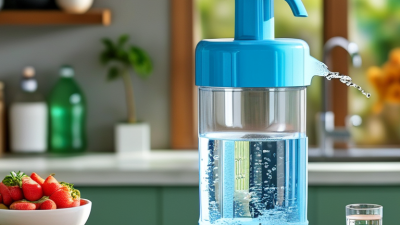
Cartridge filters are commonly used in residential drinking water systems, swimming pools, irrigation lines, and small industrial processes. In a home system, one cartridge may reduce sediment before water reaches a faucet. Pool equipment uses cartridges to capture dust, hair, and fine debris. Irrigation systems use them to protect narrow emitters from clogging. Food processing facilities may also use specialized cartridges for pre-filtration and polishing steps.
They are practical where space is limited and quick replacement matters. Maintenance staff normally check pressure gauges, flow changes, and visible dirt. A rising pressure difference often signals a loaded cartridge. Replacement timing is not always predictable. Heavy sediment can shorten service life, while a clean-looking cartridge may still hold trapped particles. No filter is perfect. It will not remove every dissolved chemical or microorganism unless it is specifically designed and validated for that purpose. A missed replacement can reduce flow and strain downstream equipment. Sometimes, the simplest inspection reveals the problem.
A cartridge filter needs regular care to keep water or air moving efficiently. Before opening the housing, shut off the supply and release trapped pressure. A sudden spray can surprise even experienced technicians. Remove the cartridge with clean hands or gloves. Rinse reusable media with low-pressure water, working from the clean side outward. Never scrub delicate pleats aggressively. Fine damage may be invisible at first.
Inspect the housing, threads, gasket, and sealing surface during every service. Remove grit with a lint-free cloth. A thin, compatible lubricant can help protect the gasket, but excess grease may collect debris. Replace a cartridge when pressure rises, flow drops, or the media becomes cracked, collapsed, or permanently discolored. Do not wash a disposable element and reinstall it. Filter Cartridge A, for example, should be replaced according to its rated conditions, not only by calendar date.
Keep a simple service record with the installation date, pressure readings, and operating symptoms. This makes replacement decisions more reliable. In my experience, waiting for complete blockage causes unnecessary stress on pumps and seals. Still, a fixed schedule is not perfect. Heavy sediment, high temperature, or unusual chemical exposure can shorten service life. Always confirm material compatibility and the correct replacement size before installation. After tightening the housing, restore pressure slowly and check for leaks around the seal. A dry paper towel makes small leaks easier to spot.
Industrial filtration is projected to expand at approximately 6% annually through 2030, according to a 2024–2030 market assessment, driven by stricter emission controls, water-reuse requirements, and demand for more efficient process equipment. These trends are increasing interest in high-flow cartridge filters that can deliver stable performance while reducing housing size, replacement frequency, and operating labor. Pleated high-flow cartridges with stainless steel support cages address these requirements by combining a large filtration area with strong mechanical stability.
The large-diameter design enables higher flow rates with fewer cartridges, helping suppliers reduce capital expenditure and minimize the footprint of filtration housings. Compared with conventional configurations, this structure can also simplify installation and routine maintenance. Manufactured in China, the cartridge is engineered for demanding industrial applications, including high-temperature and high-pressure processes. Its durable stainless steel cage supports pleated media under challenging operating conditions, while the extended service life helps reduce unplanned changeouts and maintenance workload. Industry filtration studies also identify lifecycle cost, energy efficiency, and reliability as increasingly important purchasing criteria, making this cartridge a practical option for chemical processing, power generation, water treatment, and other continuous-duty operations.
It is a replaceable filter element inside a sealed housing. Water passes through pleated fabric, fiber, carbon, or membrane media. The filter may capture sediment, rust, odors, chlorine, and some microorganisms. Results depend on the media and micron rating.
The micron rating indicates the approximate particle size the filter can capture. A 5-micron filter captures smaller particles than a 20-micron filter. However, finer filtration can reduce flow sooner. This trade-off is easy to miss.
Common parts include the housing, filter media, end caps, central core, gasket, and O-ring. The housing holds pressure around the cartridge. Pleats increase filtration area inside a compact space. Seals prevent water from bypassing the media.
Start with a source-water test. Identify sediment, chlorine, odors, or other unwanted substances. Match the media and certified claims to those findings. Clear water can still contain invisible contaminants.
Replace it when flow drops or pressure rises noticeably. Cracks, collapse, or permanent discoloration also indicate replacement. Follow the rated operating conditions, not only a calendar date. Do not wait for complete blockage.
No. Disposable cartridges should not be washed and reinstalled. Reusable media may accept gentle, low-pressure rinsing from the clean side outward. Never scrub delicate pleats aggressively. Small damage may remain invisible.
Shut off the supply before opening the housing. Release trapped pressure slowly. Inspect threads, seals, and the sealing surface during service. After reassembly, restore pressure gradually and check for leaks with a dry paper towel.
Record the installation date, pressure readings, flow changes, and replacement date. These notes reduce guesswork. A fixed schedule helps, but it is not perfect. Heavy sediment, heat, or chemical exposure may shorten service life.
A Cartridge Filter is a compact filtration device designed to remove unwanted particles, sediment, chemicals, or microorganisms from a fluid stream. Its main components typically include a housing, filter cartridge, sealing elements, inlet, outlet, and sometimes a support core or pressure-relief feature. As water, air, or another fluid passes through the cartridge, contaminants are trapped either on the surface or within the filter material. The filtration method depends on the cartridge’s pore size, material, and structure, allowing it to target different types and sizes of impurities.
Cartridge filters are available in various forms, including sediment, pleated, depth, membrane, activated-carbon, and specialized high-efficiency designs. They are commonly used in household water treatment, industrial processing, food and beverage production, laboratories, HVAC systems, and other applications requiring cleaner fluids. Proper maintenance includes checking pressure changes, inspecting seals and housings, cleaning reusable parts when suitable, and replacing disposable cartridges according to condition or operating guidelines. Timely replacement helps maintain filtration performance, protect downstream equipment, and prevent reduced flow or contamination.