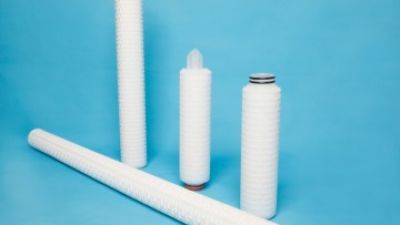
Finding reliable filter cartridges in 2026 isn’t just about comparing prices anymore — there’s a lot more to think about. Buyers from around the world really need to look at how well the filters perform, the quality of the materials used, whether the manufacturing is consistent, and the support the supplier offers. You might see two cartridges that look exactly the same in a product photo, but after using them for a few weeks, they might perform completely differently. And that’s a big deal, especially when it comes to municipal water systems, food processing lines, labs, or industrial machinery.
In this guide, we go over some of the top filter cartridges available globally. We talk about things like micron ratings, pressure limits, flow capacity, sealing methods, and how often they need replacing. We also cover common construction types like polypropylene, pleated membranes, activated carbon, stainless steel, and others. You can compare brands like Pentair, 3M, Parker Hannifin, Eaton, and Pall, and see if they provide test data and traceable quality records. While water filter cartridges might work for homes or small businesses, choosing the right one really depends on water chemistry, operating temperature, and installation conditions.
Details truly matter here. For example, a gasket that doesn’t fit properly could cause leaks well before the cartridge’s rated lifespan is up. Cutting costs on the filter itself might also mean more maintenance and higher disposal volume. But honestly, no matter how good a product sounds, the real test comes down to application — testing it in actual conditions. It’s essential to review supplier claims carefully. This is where practical judgment kicks in — don’t just go for the specs that look good on paper. Sometimes, performance data can vary between labs, and real-world installations might expose weaknesses that you won’t see in catalogs. The recommendations I’ve laid out are useful starting points, but it’s definitely worth requesting samples, checking documentation, and doing controlled trial runs before placing large orders.
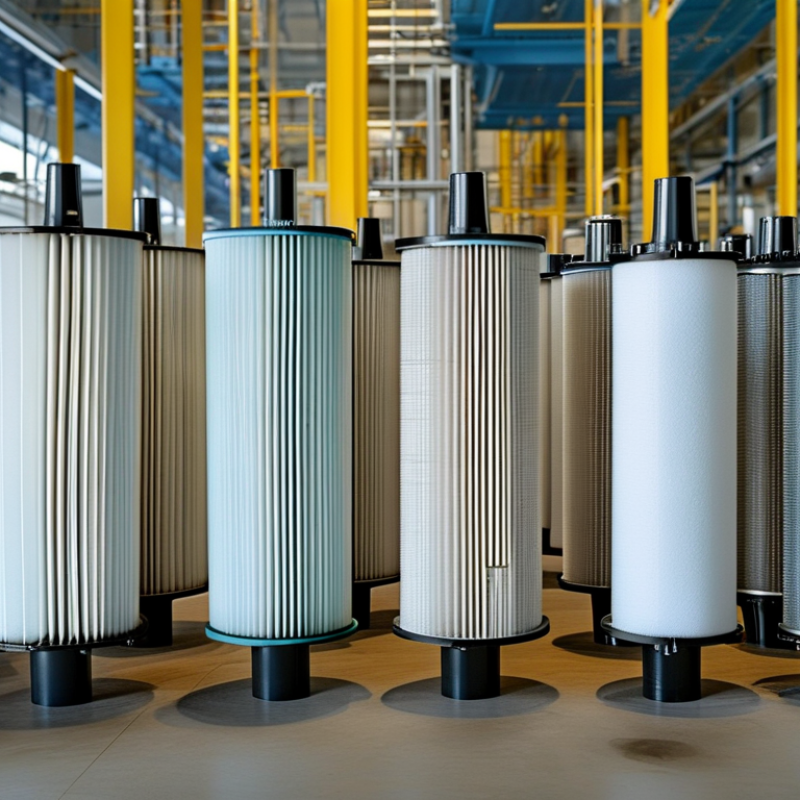
Filter Cartridges are replaceable components that remove particles from liquids or gases. In global sourcing, their value depends on fit, performance, and consistent supply. A cartridge is not selected by micron rating alone. Buyers should check filtration media, core strength, end-cap design, seal material, flow rate, and operating pressure. Small details matter. A cartridge rated at five microns may use nominal or absolute efficiency, which produces different results. Clear specifications prevent costly misunderstandings between suppliers and end users.
Practical sourcing begins with the application. A food process may require cleanable materials and careful documentation. A water-treatment system may prioritize flow stability, dirt-holding capacity, and service life. Temperature and chemical exposure also affect seal performance. Before placing a large order, request samples and compare pressure drop under realistic conditions. Inspect dimensions with simple gauges. Record test results. This evidence supports better supplier decisions than polished sales language.
Reliable suppliers should provide traceable material information, batch records, inspection reports, and relevant conformity documents. These records should be checked against the actual production sample. A certificate alone is not proof of field performance. That assumption can become expensive. In sourcing work, small pilot orders often reveal packaging weaknesses, inconsistent sealing, or unclear labeling. These issues are easy to miss during online negotiations. I would also leave room for review, because specifications can be technically correct yet poorly matched to real operating conditions.
For global sourcing in 2026, filter cartridges must match the process, not just the product description. They remove particles, oil droplets, microbes, or chemical residues from flowing liquids and gases. Inside a housing, fluid passes through pleated, depth, membrane, or activated media. Each design captures contaminants differently. Pleated media usually offers high dirt-holding capacity. Depth media traps particles through several layers. Membranes provide tighter separation but may create greater pressure loss. Small pores matter.
Industrial applications demand careful selection. Cooling-water systems often need sediment control, while food-processing lines require hygienic materials and stable flow. Hydraulic equipment depends on consistent cleanliness to protect valves and pumps. In chemical processing, temperature and fluid compatibility can matter more than the stated micron rating. Field inspection reports frequently reveal premature blockage caused by poor prefiltration or excessive flow. That mistake is common.
Reliable sourcing requires more than comparing unit prices. Buyers should verify test methods, seal materials, operating temperature, pressure limits, and documented batch quality. The phrase Finest Filters Water Filter Cartridges may appear in search results, but specifications should guide the decision. Ask for traceable certificates and performance data. Then compare them with actual site conditions. A cartridge rated for clean water may fail quickly in abrasive process liquid. It happens.
Maintenance teams should monitor differential pressure, flow decline, and visible discoloration. Replacement intervals need evidence, not guesswork. In practice, a slightly higher-cost cartridge can reduce labor and unplanned shutdowns. Still, no design is perfect. Product trials and measured results remain necessary.
Global sourcing starts with the contaminant, not the cartridge label. Sediment cartridges remove sand, rust, and visible particles. Pleated designs offer larger surface areas for higher flow. Carbon blocks reduce chlorine, odors, and selected organic compounds. Reverse Osmosis Water Filter Cartridges target dissolved salts, heavy metals, and other tiny contaminants. Ultrafiltration membranes handle bacteria and suspended solids, but they do not remove dissolved minerals effectively.
Demand keeps expanding. The World Health Organization and UNICEF reported that 2.2 billion people lacked safely managed drinking water in 2022. Grand View Research also projects strong growth in the global water filtration market through 2030. These figures support broader sourcing, but specifications remain more important than volume. A lower micron rating sounds better. It can also increase pressure loss and replacement frequency. I have seen buyers overlook this trade-off.
Tips: Match the cartridge to a laboratory water test, required flow, operating pressure, and housing size. Check reduction claims against NSF/ANSI 42, 53, or 58 where applicable. Ask suppliers for batch records, migration testing, and exact media composition. Do not rely on “universal” claims. A carbon cartridge may improve taste, yet fail against a specific pesticide. RO elements need suitable pretreatment, or fouling can develop quickly. Supplier documents should also state temperature limits, service life, and disposal guidance. Mistakes happen, especially when purchase teams compare price before performance.
| Filter Cartridge Type | Typical Filter Media | Common Nominal or Absolute Rating | Main Filtration Mechanism | Recommended Applications | Typical Operating Temperature | Chemical Compatibility | Key Advantages | Main Limitations and Sourcing Checks |
|---|---|---|---|---|---|---|---|---|
| Melt-Blown Depth Cartridge | Polypropylene microfiber layers with graded density | 1–100 μm nominal | Depth capture throughout the media structure | Pre-filtration for water, chemicals, plating solutions, process liquids, and reverse-osmosis systems | Usually up to approximately 60–80°C, depending on construction | Good resistance to many dilute acids, bases, and aqueous fluids; verify solvent compatibility | Low cost, broad availability, good dirt-holding capacity, and no fiber binder in standard polypropylene versions | Not normally suitable for high-precision absolute particle removal; confirm pressure drop, core strength, and end-cap sealing |
| Pleated Surface Cartridge | Polypropylene, polyester, cellulose blend, or membrane sheet | 0.1–100 μm, depending on media and test method | Surface filtration across pleated media with increased area | Water treatment, beverage pre-filtration, industrial process water, and general liquid clarification | Commonly up to approximately 60–80°C for polypropylene designs; higher for selected polymers | Depends on media, support layer, adhesive, and gasket material | Higher dirt-holding capacity and lower initial pressure drop than many non-pleated designs | May foul quickly with highly viscous or heavily loaded fluids; compare effective filtration area and clean pressure drop |
| Membrane Cartridge | Polyethersulfone, polyvinylidene fluoride, nylon, polypropylene, or polytetrafluoroethylene | Approximately 0.03–1.2 μm, commonly specified as absolute or validated retention | Precision surface filtration and size-exclusion through microporous membrane | Final filtration of high-purity water, bioprocess fluids, pharmaceutical solutions, food and beverage products, and gases | Often about 40–85°C, depending on membrane chemistry and sterilization method | Varies significantly; check pH range, solvent resistance, oxidant tolerance, and extractables | High retention consistency and suitable for critical final filtration | Higher cost and faster fouling when used as a primary filter; request integrity-test data and validated retention claims |
| Activated Carbon Cartridge | Granular activated carbon, carbon block, or carbon with a particulate pre-layer | Particle removal commonly 5–20 μm; adsorption performance is contaminant-specific | Adsorption of dissolved compounds plus optional particle filtration | Reduction of chlorine, taste, odor, and selected organic contaminants in water treatment | Generally used in ambient or moderately warm water; verify manufacturer limits | Best for aqueous streams; strong oxidants and some solvents can reduce service life or damage components | Effective reduction of many taste-and-odor compounds and chlorine-related contaminants | Does not remove all dissolved salts or microorganisms; confirm carbon type, iodine value, contact time, and bacterial-growth control |
| Ceramic Cartridge | Porous ceramic, often with an outer ceramic shell and optional internal carbon core | Commonly around 0.2–1 μm nominal, depending on pore structure | Surface filtration through interconnected ceramic pores | Gravity-fed water systems, drinking-water treatment, and applications requiring a washable outer surface | Often suitable for moderate temperatures; exact limit depends on housing and seals | Generally stable in water and selected chemicals; rapid thermal shock should be avoided | Washable surface, long potential service life, and good resistance to biological particle passage when properly rated | Lower flow rate and fragile handling compared with polymer cartridges; verify crack inspection and replacement procedures |
| Stainless-Steel Mesh Cartridge | Woven stainless-steel wire mesh, sintered mesh, or perforated metal support | Approximately 5–1,000 μm, depending on mesh or pore design | Surface screening and depth retention in sintered structures | Hydraulic oil, fuel, high-temperature liquids, polymer processing, and coarse industrial filtration | Can support high temperatures; limit is determined by steel grade, welds, seals, and housing | Strong resistance to heat and many industrial fluids; select steel grade for chloride or acidic environments | Reusable, mechanically strong, and suitable for high-pressure or high-temperature service | Higher purchase cost and limited fine-particle capacity in simple mesh designs; request weld quality and collapse-pressure data |
| Polyester or Nylon Bag-Style Cartridge | Needled polyester felt, polypropylene felt, or nylon mesh | Approximately 1–800 μm, with nominal ratings commonly used | Depth capture in felt or surface capture in mesh | Paints, coatings, inks, cooling water, wastewater, and bulk liquid pre-filtration | Varies by polymer; many designs operate below approximately 90–120°C | Polyester and nylon compatibility differs with acids, bases, solvents, and oxidizing chemicals | High dirt-holding capacity, simple replacement, and economical operation for high contaminant loads | Seal bypass and bag collapse can occur if sizing is poor; check ring style, dimensions, seam strength, and differential-pressure limit |
| Oil-Absorbing Cartridge | Polypropylene melt-blown or specialized oleophilic absorbent media | Particle rating may range from approximately 1–25 μm; absorption capacity is application-specific | Absorption of free oil and particulate capture | Oil-contaminated water, coolant maintenance, spill control, and industrial wastewater polishing | Usually limited by polypropylene temperature resistance and the surrounding housing | Suitable for many aqueous streams containing hydrocarbons; verify compatibility with solvents and emulsions | Can selectively absorb free oil while allowing much of the water phase to pass | Less effective for stable emulsions or dissolved hydrocarbons; request absorption capacity test conditions and flow-rate data |
| Vent and Gas Cartridge | Hydrophobic PTFE, polypropylene membrane, or other gas-rated microporous media | Commonly 0.1–0.3 μm for sterile air or gas applications | Particle retention with hydrophobic barrier protection and optional gas sterilization capability | Tank vents, compressed-air lines, fermentation equipment, pharmaceutical processing, and gas protection | Often approximately 80–140°C, depending on membrane, housing, and sterilization cycle | Hydrophobic PTFE is broadly resistant; check steam, solvents, pressure, and integrity-test compatibility | Prevents liquid ingress while allowing gas flow and can support validated microbial retention | Liquid flooding can block gas flow; verify water-entry pressure, air-flow rate, bacterial-retention validation, and integrity testing |
| High-Flow Cartridge | Large-area pleated polypropylene or composite depth media | Approximately 1–100 μm, depending on design | High-area depth or surface filtration at reduced cartridge count | Municipal water, cooling water, industrial water, pre-RO filtration, and high-volume process lines | Often approximately 60–80°C for polypropylene-based products | Suitable for many aqueous applications; verify seals and media for chemical service | High flow per element, lower footprint, and fewer change-out points than standard small cartridges | Requires compatible high-flow housings; compare actual flow at target pressure drop rather than headline flow claims |
| Sterilizing-Grade Cartridge | Validated microporous membrane, commonly polyethersulfone or PTFE for gas service | Typically 0.2 μm for liquid microbial retention, subject to validation | Validated microorganism retention through membrane filtration | Pharmaceutical, biotechnological, medical, and high-purity food or beverage processes | Depends on steam, hot-water, or chemical-sanitization requirements | Must be selected according to product chemistry, sanitization agents, and sterilization cycle | Suitable for critical applications requiring documented microbial-retention performance | Requires validated test data, controlled manufacturing, extractables information, and proper pre-filtration to prevent premature fouling |
Filter media determines what a cartridge can remove and how long it performs. Polypropylene depth media handles sediment, rust, and larger particles. Melt-blown layers create a graded structure, allowing dirt to collect through the cartridge depth. Pleated polyester offers more surface area and often supports higher flow rates. It can be easier to clean, though not always suitable for every fluid. Short fibers may shed. That detail matters.
Membrane choices require closer evaluation. PES supports fine filtration in many water applications, while PTFE suits demanding gas or chemical conditions. Activated carbon reduces chlorine, odors, and some organic compounds. Its performance depends on carbon quality, contact time, and housing design. A low micron rating alone proves little. Suppliers should request test data, not attractive numbers.
Construction affects handling and reliability. Polypropylene cores resist many common water conditions and keep the cartridge lightweight. Stainless steel supports higher temperature and pressure, but increases cost and shipping weight. End caps, seals, and gaskets must match the housing. DOE and SOE designs are not interchangeable. When sourcing Pentair Water Filter Replacement Cartridges , buyers should verify dimensions, seal material, flow direction, and replacement fit. Traceable batch records and pressure testing strengthen supplier credibility. I have seen specifications miss gasket hardness. That mistake can cause leakage. A perfect specification is rare, so field feedback should change the next purchase.
Cartridge quality starts with measurable performance, not attractive packaging. In supplier audits, I check pressure drop at the stated flow rate, micron rating, and dirt-holding capacity.
ISO 16889 defines the beta ratio test for industrial filter efficiency. A beta ratio of 2,000 indicates approximately 99.95% retention at the tested particle size. The result applies only to that size and test condition. Numbers reveal weaknesses.
NSF/ANSI 42 classifies particulate reduction into ranges, including 0.5 to below 1 micron for Class I claims. NSF/ANSI 53 covers specific health-related contaminant claims, not universal purification. Buyers should request the exact contaminant, flow rate, capacity, and end-point pressure.
A cartridge rated at 10 microns may still perform poorly under sudden flow changes. That matters.
For critical applications, ASTM F838 uses a bacterial challenge near 0.3 micron to evaluate sterilizing-grade filtration. Manufacturers should provide integrity-test results, extractables data, material certificates, and lot traceability.
The World Health Organization’s 2022 drinking-water guidelines also emphasize risk-based verification rather than relying on a single specification. I would not accept a laboratory certificate without matching production records.
That may sound cautious, but test conditions are often cleaner than real water, real dust, and real operators. Content from a 2026 sourcing review should therefore compare verified data, not just nominal micron labels.
In 2026, filter cartridge sourcing requires more than checking micron ratings. Buyers should match certifications with the intended application and destination market. For drinking water, NSF/ANSI 42 or 53 may apply, depending on contaminant claims. Food-contact materials may require migration testing and compliance with applicable regulations. Industrial air applications can require performance testing under ISO 29463 or related standards.
Documentation matters as much as the cartridge itself. Request a current certificate, test report, declaration of conformity, and material specification. Check the certificate scope, production site, model number, and expiry date. A certificate for one cartridge design may not cover another. It happens often. Lot traceability should connect each shipment to resin, membrane, housing, and final inspection records. Keep pressure-drop, flow-rate, and integrity-test data available.
Global compliance is rarely one checklist. Requirements can change by country, use, and customer contract. Chemical rules, restricted-substance limits, packaging obligations, and labeling requirements deserve separate review. A supplier should explain testing methods, sampling quantities, and laboratory accreditation. Independent verification is useful when claims seem unusually broad. Still, audits have limits. A clean factory visit cannot replace application testing under real temperature, pressure, and chemical conditions. Build a small validation plan before large-volume purchasing. That step may delay approval, but it can expose weak seals, unstable flow, or incomplete paperwork early.
2026 Top Filter Cartridges for Global Sourcing
Global sourcing starts with application data, not catalogue popularity. Define the fluid, temperature, pressure, flow rate, and target particle size. A cartridge that works in clean water may fail in oily process fluid. Ask suppliers for material specifications, batch records, and test methods. Request samples from the same production line. Small differences matter.
Supplier evaluation should include manufacturing experience, quality controls, and response speed. Check whether the factory can maintain pore size, dimensions, and sealing quality across repeated batches. Review inspection records and traceability documents. Video audits can help, but they cannot replace physical verification. I have found that attractive samples sometimes hide weak packaging or inconsistent labels. That mistake is expensive.
Cost analysis must include more than the unit price. Add tooling, testing, freight, insurance, duties, storage, and replacement labor. Compare landed cost by shipment volume. A cheaper cartridge may create more downtime through early blockage. Ask for realistic lead times during peak seasons. Keep a second qualified supplier where practical, preferably in another region. Yet dual sourcing is not automatically safer; both suppliers may depend on the same raw material. This risk is easy to miss. Review shipping routes, energy exposure, currency changes, and regional disruptions every quarter. Document assumptions, and challenge them when operating data changes.
Pleated depth media filter cartridges are designed to deliver efficient, dependable filtration in demanding industrial processes. Their folded structure creates a large effective filtration area within a compact cartridge, allowing contaminants to be captured throughout the depth of the media rather than only on the surface. This design supports a uniform pore structure, stable removal performance, and high flow rates, even when operating conditions or contaminant loads change. By maintaining a low pressure drop, the cartridge can help reduce pumping energy and support smoother system operation.
A high dirt-holding capacity allows the filter to retain more suspended solids before replacement is required, extending service life and reducing maintenance frequency. Its durable construction is also suited to applications involving heat and chemically challenging fluids. These cartridges can be used for liquid and gas purification in chemical processing, pharmaceutical production, food and beverage manufacturing, electronics, and petrochemical operations. By removing particulate matter and other unwanted contaminants, they help protect downstream equipment, maintain process consistency, and support the purity of finished products. Proper selection should consider flow rate, operating temperature, chemical compatibility, contaminant concentration, and the required filtration rating.
A filter cartridge is a replaceable component for removing particles from liquids or gases. It fits inside a housing. Its performance depends on media, seals, flow, and pressure.
No. A five-micron rating may be nominal or absolute. These terms produce different filtration results. Check efficiency, test methods, and actual process conditions.
Confirm dimensions, filtration media, core strength, end-cap design, seal material, flow rate, and pressure limits. Also check temperature and chemical compatibility. Small details matter.
Request samples and place a small pilot order. Compare pressure drop under realistic conditions. Use simple gauges to inspect dimensions. Record every result.
Polypropylene depth media captures sediment, rust, and larger particles. Pleated polyester offers greater surface area and often supports higher flow. Membranes provide finer separation but may increase pressure loss.
Seals must match the housing and process fluid. Stainless steel supports higher pressure and temperature, but adds weight and cost. Poor gasket hardness can cause leakage. Not always obvious.
Monitor differential pressure, declining flow, and visible discoloration. Replacement should follow measured evidence rather than a fixed guess. A slightly higher purchase cost may reduce labor and shutdowns.
Useful records include material information, batch records, inspection reports, test methods, and conformity documents. Compare documents with the production sample. A certificate alone proves little.
The cartridge may not match real flow, temperature, chemical exposure, or contamination levels. Poor prefiltration can cause early blockage. Field feedback should change the next purchase. Mistakes happen.
In 2026, Filter Cartridges remain essential components for industrial water treatment, process control, air purification, food production, pharmaceuticals, and other applications that require reliable separation. Their performance depends on how fluid passes through the filter media, while cartridge design, pore structure, surface area, sealing method, and construction materials determine removal efficiency, pressure stability, service life, and compatibility. Common options include sediment, pleated, membrane, depth, activated carbon, and high-temperature or chemically resistant cartridges, each suited to different filtration goals.
For global sourcing, buyers should compare micron ratings, flow capacity, pressure drop, dirt-holding ability, temperature resistance, and validation data rather than relying on price alone. Supplier evaluation should include manufacturing consistency, quality control, documentation, production capacity, lead times, packaging, and after-sales support. Applicable 2026 standards, certifications, testing records, and material traceability should also be reviewed. A balanced sourcing strategy considers total cost, replacement frequency, logistics, regional availability, and risks such as supply interruptions, inconsistent quality, and changing compliance requirements.